•
2026/04/12•HEMSCap Content Writer
Revolutionizing Physical Therapy with AI Exercise Correction: How Technology Improves Training and Recovery
Introduction
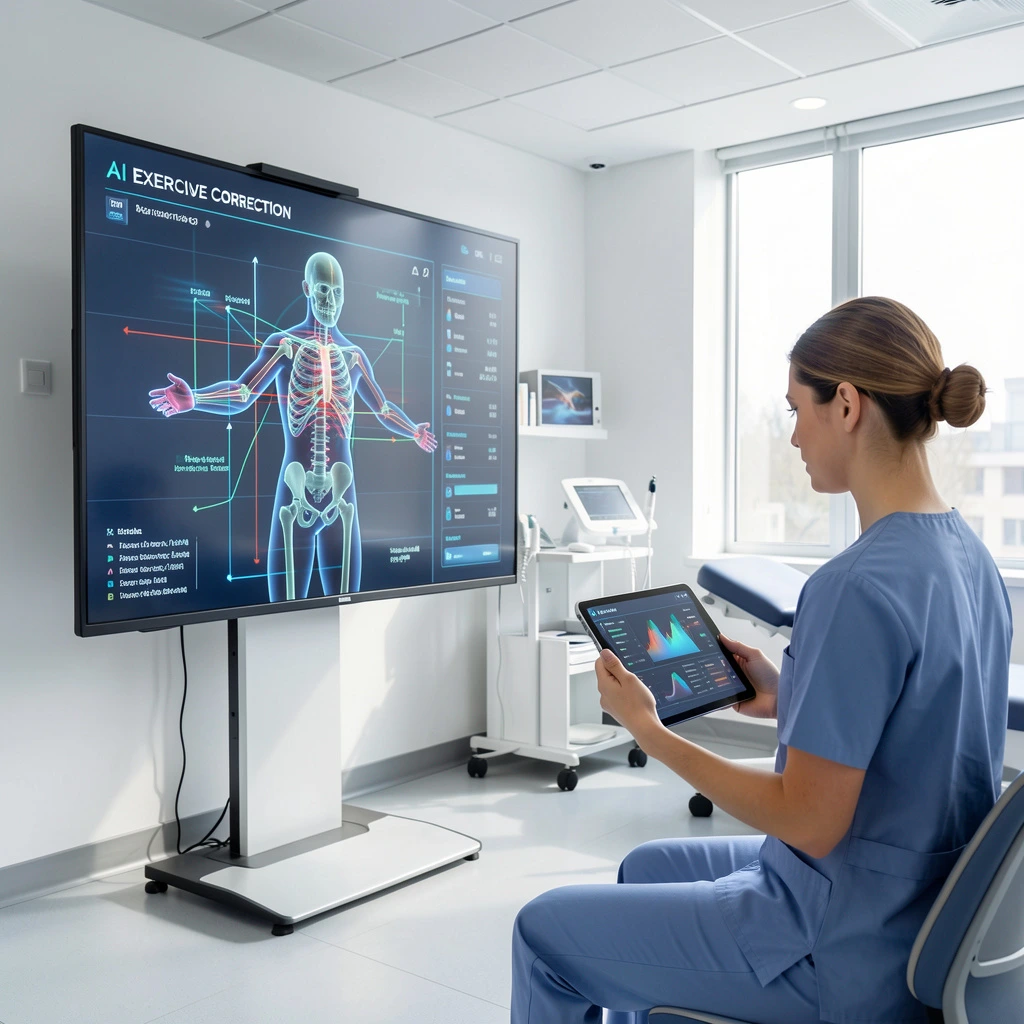
Artificial Intelligence is rapidly transforming healthcare and one of the most promising areas of innovation is physical therapy and rehabilitation. Traditional rehabilitation programs rely heavily on in-person supervision by therapists to ensure that patients perform exercises correctly.However, incorrect movements can slow recovery and may even increase the risk of injury. This challenge has led to the development of AI Exercise Correction, a technology that uses artificial intelligence to analyze body movements and provide real-time feedback.
AI-powered motion analysis systems can track body posture, joint alignment, and movement patterns during exercise. These systems help patients perform rehabilitation exercises correctly while providing therapists with objective performance data. As a result, therapy programs become more personalized and data-driven.
Recent advancements in computer vision and artificial intelligence algorithms have significantly improved the capabilities of motion analysis systems. These technologies can detect subtle errors in joint alignment and muscle activation patterns that may occasionally be overlooked even by experienced therapists. This increased level of precision improves exercise accuracy and reduces the risk of injury during rehabilitation. In addition, AI-driven platforms can collect long-term performance data, enabling therapists to modify treatment plans based on objective insights rather than relying only on observation.
With the rise of digital rehabilitation platforms such as HEMSCap, AI Exercise Correction is becoming a practical solution for both clinics and home-based therapy programs.
What is AI Exercise Correction?
Definition and Core Concept
AI Exercise Correction refers to the use of artificial intelligence technologies—such as computer vision, machine learning, and motion tracking—to evaluate and correct human movement during exercises.
These systems analyze posture, joint angles, and movement patterns to detect incorrect techniques and provide real-time feedback to the user.
In physical therapy settings, this capability is especially valuable because accurate movement execution is essential for safe and effective rehabilitation.
How AI Exercise Correction Works
AI Exercise Correction systems typically combine several advanced technologies to monitor and analyze human movement.
Motion Tracking Technology
AI systems use cameras or sensors to capture body movement during exercises. Computer vision algorithms analyze body landmarks such as shoulders, hips, knees, and elbows to determine movement accuracy.
These technologies allow the system to track motion without requiring complex wearable devices.
Real-Time Feedback
One of the most valuable features of AI Exercise Correction is the ability to provide instant feedback.
If a patient performs a movement incorrectly—such as bending the knee at the wrong angle or shifting weight improperly—the system immediately notifies the user and suggests corrections.
Data Analysis and Performance Monitoring
AI platforms collect detailed performance data over time. This allows therapists to evaluate patient progress and adjust therapy programs based on measurable improvements.
Objective performance data also helps identify movement patterns that may lead to injury if not corrected.
Applications of AI Exercise Correction in Physical Therapy
Rehabilitation Programs
AI Exercise Correction is widely used in rehabilitation programs for patients recovering from musculoskeletal injuries or surgery.
These systems help ensure that rehabilitation exercises are performed safely and correctly even when patients practice at home.
Remote Physical Therapy
Remote therapy has become increasingly important in modern healthcare. AI-based exercise monitoring allows therapists to supervise patients remotely without requiring frequent clinic visits.
This approach improves accessibility for patients who live far from healthcare facilities or have limited mobility.
Injury Prevention and Athletic Training
Athletes also benefit from AI Exercise Correction technologies. By analyzing movement patterns, AI systems can identify improper techniques that increase the risk of injury.
Correcting these issues early helps improve performance and reduce long-term injury risk.
The Role of HEMSCap in AI-Driven Rehabilitation
Overview of HEMSCap
HEMSCap is a digital rehabilitation platform that integrates artificial intelligence with motion tracking technology to improve exercise monitoring and therapy outcomes.
The platform enables therapists to create personalized exercise programs and track patient progress through detailed performance analytics.
Key Features of the HEMSCap Platform
- Real-time exercise feedback
Patients receive immediate guidance during exercises, helping them correct movements and maintain proper form throughout therapy sessions.
- Personalized therapy programs
The platform allows therapists to design customized exercise plans tailored to the specific condition and recovery stage of each patient.
- Remote monitoring capabilities
Therapists can review patient performance data remotely, making it easier to manage rehabilitation programs outside the clinic.
- Data-driven clinical insights
Performance analytics help therapists evaluate patient progress objectively and adjust treatment strategies when necessary.
Benefits of AI Exercise Correction
Improved Exercise Accuracy
AI-based movement analysis helps patients perform exercises correctly and consistently.
Accurate movement execution is essential for achieving optimal rehabilitation outcomes.
Increased Patient Engagement
Interactive feedback encourages patients to remain engaged with their therapy programs.
When patients can clearly see their progress, they are more likely to continue performing exercises regularly.
Better Clinical Decision-Making
AI systems provide therapists with detailed performance data that can guide treatment decisions.
Objective data allows therapists to modify exercise intensity, frequency, and progression based on measurable results.
Enhanced Accessibility of Therapy
AI Exercise Correction allows patients to perform guided exercises from home while still receiving professional oversight.
This approach expands access to rehabilitation services and reduces the need for frequent in-person visits.
Challenges and Limitations
Despite its many advantages, AI Exercise Correction also faces several challenges.
Technology Requirements
Accurate movement analysis requires reliable cameras, sensors, and software systems.
Without high-quality hardware and calibration, motion tracking accuracy may be reduced.
User Adaptation
Some patients may initially find digital therapy platforms difficult to use.
Providing proper training and user-friendly interfaces is essential to ensure successful adoption.
Practical Tips for Implementing AI Exercise Correction
- Start with simple movement exercises
Patients should begin with basic exercises to become familiar with AI feedback systems and motion tracking features.
- Monitor performance regularly
Reviewing exercise data helps identify progress and ensures that therapy programs remain effective.
- Combine AI with professional guidance
AI tools should complement, not replace, the expertise of physical therapists.
- Choose reliable digital platforms
Using trusted rehabilitation systems such as HEMSCap improves accuracy and patient safety.
Final Thoughts
The integration of artificial intelligence into rehabilitation is transforming the way physical therapy programs are delivered. AI Exercise Correction allows patients to perform exercises more accurately while giving therapists access to detailed performance data that supports better clinical decisions.
Platforms like HEMSCap demonstrate how AI-driven motion analysis can improve therapy outcomes by combining real-time feedback, remote monitoring, and data-driven insights.
Moreover, AI Exercise Correction supports evidence-based practice by providing quantitative data on patient performance, which can help therapists adjust exercise intensity and progression. Research shows that digital rehabilitation systems can improve adherence to therapy programs by offering interactive feedback and progress tracking. These technologies also enable clinics to expand remote care services while maintaining treatment quality. Long-term movement analysis can reveal improper exercise patterns and help prevent future injuries. By integrating AI tools into therapy programs, healthcare providers can optimize treatment efficiency and empower patients to take a more active role in their recovery.
As technology continues to advance, AI Exercise Correction is likely to become an essential component of modern rehabilitation and physical therapy practice.
FAQ
1. What is AI Exercise Correction?
AI Exercise Correction is a technology that uses artificial intelligence to analyze body movements during exercises and provide real-time feedback to improve movement accuracy.
2.Can AI Exercise Correction be used for home rehabilitation?
Yes. Many digital therapy platforms allow patients to perform guided exercises at home while therapists monitor progress remotely.
3.How does AI improve physical therapy outcomes?
AI provides objective data about exercise performance, helping therapists adjust treatment plans and ensure exercises are performed correctly.
4.What role does HEMSCap play in rehabilitation technology?
HEMSCap is a digital platform that combines motion tracking and artificial intelligence to monitor rehabilitation exercises and support personalized therapy programs.
5.Does AI replace physical therapists?
No. AI tools are designed to support therapists by providing data and feedback, but professional supervision remains essential for effective rehabilitation.