•
2026/04/20•HEMSCap Content Writer
The Role of Computer Vision in Physical Therapy: Transforming Digital Rehabilitation with AI
Introduction
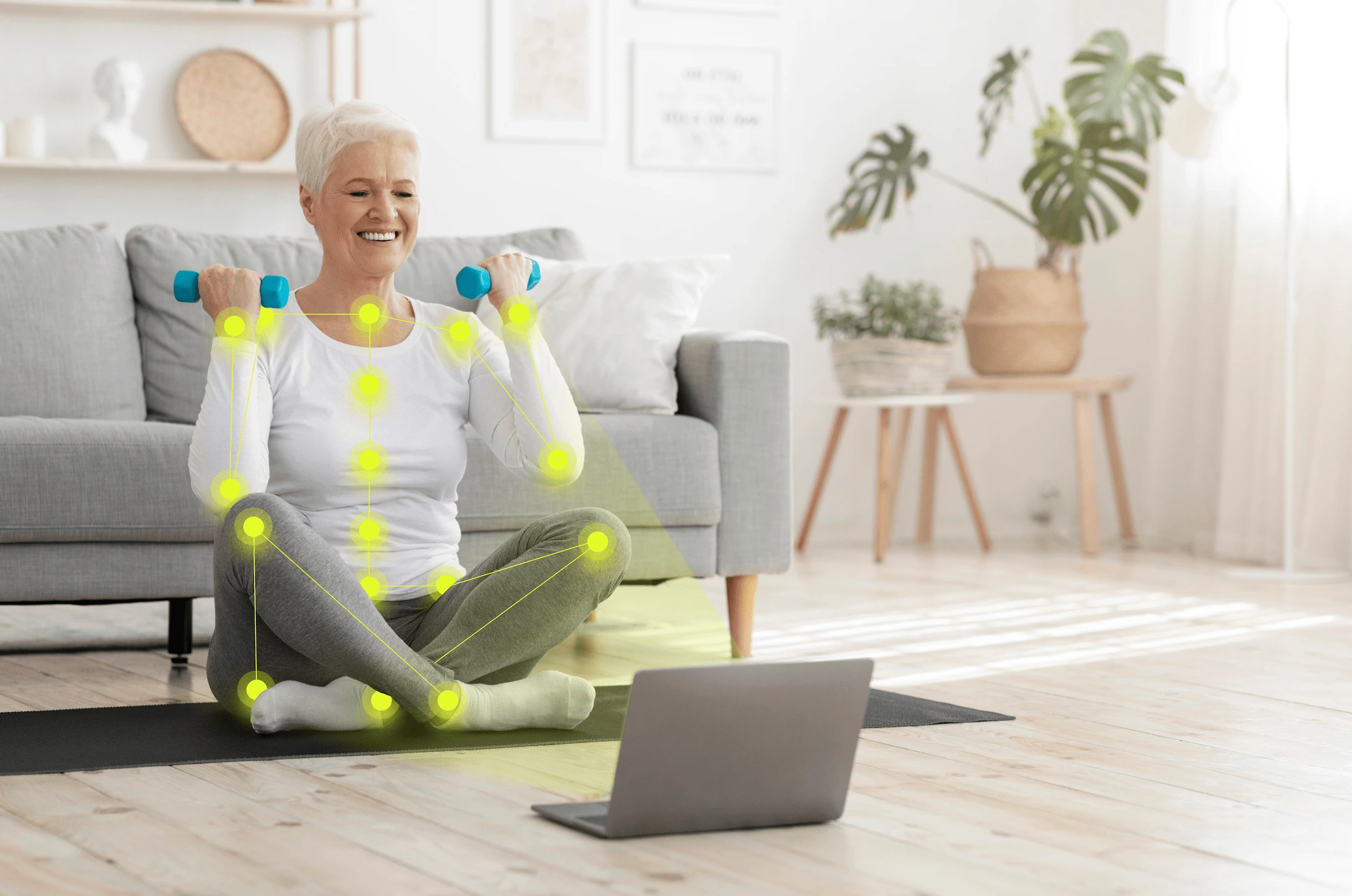
In recent years, the integration of artificial intelligence into healthcare has driven significant transformation across clinical practices. One of the most impactful technologies in this space is computer vision in physical therapy, which enables accurate ananlysis of human movement without requiring complex or expensive hardware. By leveraging cameras and advanced algorithms, this technology can capture, interpret and evaluate patient movements in real time. In physical therapy, precision in exercise execution and continuous monitoring are critical to successful outcomes. Solutions like HEMSCap demonstrate how computer vision can bridge the gap between in-clinic and remote care. This article explores the core concepts, applications and benefits of this evolving technology.
Additionally, recent advances in pose estimation algorithms such as those based on deep neural networks have made it possible to track human joints with high accuracy using standard RGB cameras. This reduces dependency on specialized motion capture systems traditionally used in clinical settings. These improvements allow scalable deployment of rehabilitation tools across home environments, supporting the growing demand for remote care and hybrid treatment models.
As healthcare systems increasingly focus on outcome-based care, the ability to collect objective movement data is becoming essential for both clinical decision-making and performance evaluation.
What is Computer Vision and How Does It Work?
Computer Vision is a branch of artificial intelligence that enables machines to interpret and analyze visual data such as images and videos. It transforms raw visual input into meaningful insights using machine learning and deep learning techniques.
Core Components of Computer Vision
- Image Processing
Raw images are preprocessed to remove noise and enhance quality. This step ensures that the data is clean and suitable for accurate analysis.
- Pattern Recognition
The system identifies movement patterns such as joint angles and limb positions. This capability is essential for evaluating therapeutic exercises.
- Deep Learning Models
Advanced models trained on large datasets can distinguish between correct and incorrect movements. This enables precise feedback and performance assessment.
Applications of Computer Vision in Physical Therapy
The adoption of Computer Vision in Physical Therapy is transforming how rehabilitation services are delivered. It allows clinicians to monitor and evaluate patients without requiring constant physical presence.
Key Applications
1. Motion Analysis
- Computer vision systems capture patient movements using standard cameras
- Then analyze joint angles and posture with high precision to assess performance
- This analysis helps identify incorrect movements early
- And reduces the risk of injury during rehabilitation exercises
2. Real-Time Feedback
- Patients receive immediate feedback while performing exercises
- This feedback can be visual, audio, or instruction-based
- Instant correction improves exercise accuracy
- And accelerates the recovery process significantly
3. Remote Monitoring
- Therapists can monitor patients from a distance using digital platforms
- This is especially valuable for patients who cannot attend in-person sessions
- Continuous data tracking enables better clinical decisions
- And ensures consistency in treatment plans
4. Personalized Treatment Plans
- Data collected from patient movements supports customized therapy programs
- Each patient receives exercises tailored to their condition and progress
- Personalization increases patient engagement
- And leads to more effective rehabilitation outcomes
The Role of HEMSCap in Advancing Computer Vision
HEMSCap is a real-world example of how Computer Vision in Physical Therapy can be implemented effectively. The platform integrates motion analysis, AI, and clinical workflows into a unified system.
Key Features of HEMSCap
- Camera-Based Motion Tracking
The system analyzes patient movement without requiring wearable devices. This reduces costs and improves accessibility for both clinics and patients.
- Real-Time Patient Feedback
Patients receive instant guidance during exercises. This ensures proper execution and minimizes errors in movement.
- Support for Remote Therapeutic Monitoring (RTM)
HEMSCap enables clinicians to track patient progress remotely. This plays a critical role in hybrid care models combining in-person and digital therapy.
- Automated Clinical Documentation
Movement data is automatically converted into structured clinical reports. This significantly reduces administrative workload for therapists.
Benefits of Computer Vision in Rehabilitation
The integration of computer vision into rehabilitation offers measurable advantages for both patients and healthcare providers.
Key Benefits
- Improved Treatment Accuracy
Motion data analysis reduces human error in evaluating exercises
And ensures therapy decisions are based on objective data
- Reduced Need for In-Person Visits
Patients can complete many exercises at home effectively
While still being monitored by their therapist remotely
- Enhanced Patient Engagement
Real-time feedback keeps patients motivated and consistent
Increasing adherence to therapy programs
- Optimized Therapist Efficiency
Automation reduces time spent on repetitive tasks
Allowing therapists to focus on complex clinical cases
Scientific Validation of Computer Vision in Physical Therapy
A number of academic studies have explored the use of computer vision in rehabilitation. Research indicates that deep learning-based motion analysis systems can accurately estimate joint positions and evaluate movement quality, with performance levels comparable to trained clinicians in certain controlled settings.
Final Thoughts
Computer Vision in Physical Therapy represents a major advancement in digital healthcare, enabling more precise, accessible, and data-driven rehabilitation. By combining motion analysis, real-time feedback, and remote monitoring, this technology is reshaping how therapy is delivered and experienced.
Platforms like HEMSCap highlight the practical implementation of these innovations, demonstrating how AI can support clinicians and improve patient outcomes. As adoption continues to grow, computer vision is expected to become a core component of modern physical therapy systems.
Moreover, ongoing improvements in AI model accuracy and computational efficiency are making these solutions more reliable in real-world clinical environments.
Integration with electronic health record (EHR) systems is also enabling better data continuity and more informed clinical decisions.
Standardization efforts in digital health are helping ensure that computer vision tools meet regulatory and clinical requirements.
Together, these developments indicate a clear shift toward scalable, evidence-based, and technology-driven rehabilitation practices.
FAQ
1. What is the role of Computer Vision in Physical Therapy?
It is used to analyze patient movements and evaluate exercise performance
Helping improve accuracy and effectiveness in rehabilitation.
2. Can Computer Vision replace physical therapists?
No, it serves as a supportive tool for clinicians
Final diagnosis and treatment decisions remain with therapists.
3. Is Computer Vision safe for patients?
Yes, when implemented with proper data protection measures
Ensuring patient privacy is a critical requirement.
4. How does HEMSCap use Computer Vision?
It uses camera-based motion tracking to analyze exercises
And enables remote monitoring and real-time feedback.
5. Is this technology suitable for all patients?
It is suitable for most rehabilitation cases
But some conditions may still require in-person evaluation