•
2026/02/14•HEMSCap Content Writer
Transforming Clinical Decision- Making in Rehabilitation ( The Role of Clinical Reasoning with AI in Rehabilitation )
Introduction
Clinical decision-making in rehabilitation is a complex and cognitively demanding process. Professionals working in rehabilitation and physical therapy must continuously analyze multiple sources of information, including patient history, functional assessments, movement quality, and response to treatment. This analytical process, known as clinical reasoning, lies at the core of effective rehabilitation care.
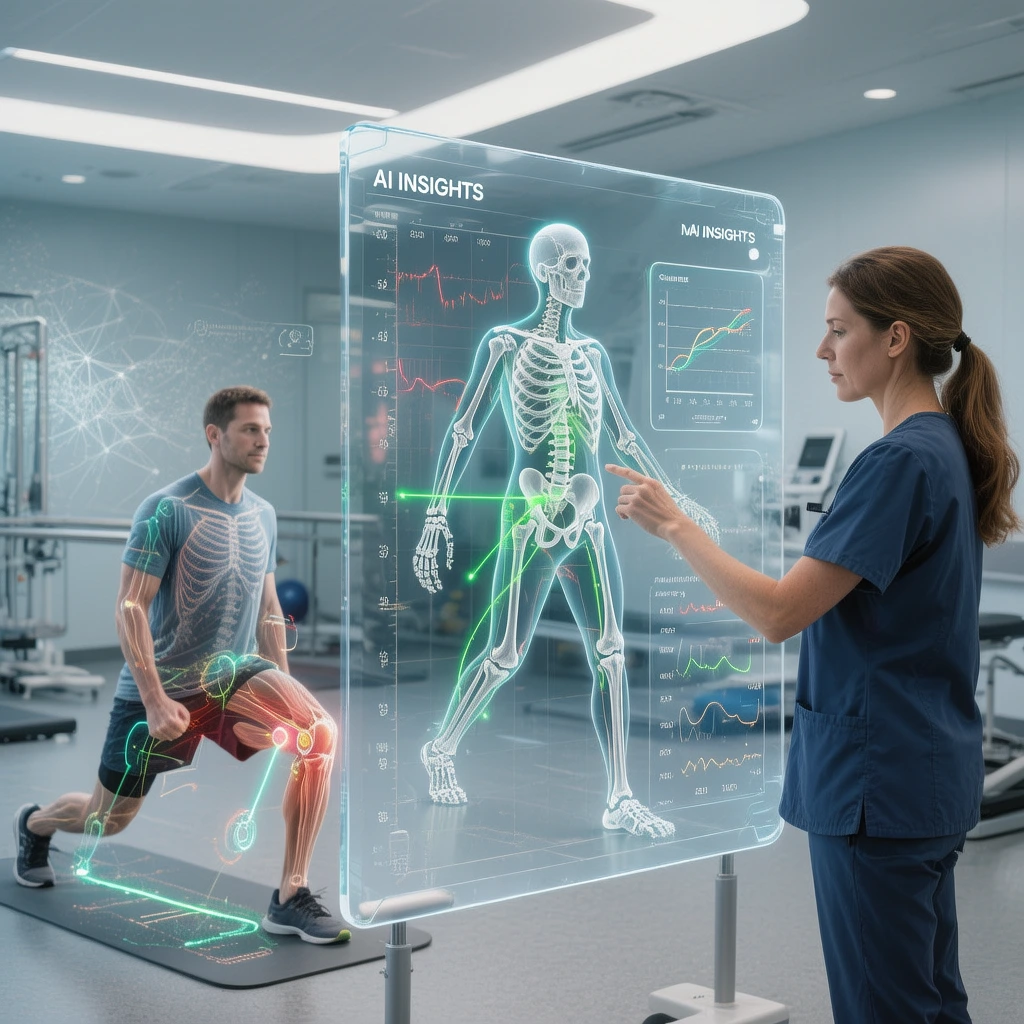
As digital health technologies continue to evolve, artificial intelligence is increasingly being introduced as a supportive tool in clinical environments. This has led to the emergence of clinical reasoning with AI in rehabilitation, an approach in which AI systems assist clinicians by analyzing clinical data, identifying meaningful patterns, and supporting evidence-informed decisions. Rather than replacing professional judgment, AI aims to enhance the clinician’s ability to deliver precise, personalized, and efficient care.
This article explores how clinical reasoning with AI is shaping rehabilitation practice, its real-world applications in physical therapy, its benefits and limitations, and how companies such as HEMSCap are contributing to this transformation.
What Is Clinical Reasoning in Rehabilitation?
Definition and Importance in Physical Therapy
Clinical reasoning refers to the cognitive process clinicians use to assess patients, interpret clinical findings, plan interventions, and evaluate outcomes. In rehabilitation and physical therapy, this process is dynamic and ongoing, requiring constant reassessment as patients progress or encounter challenges during treatment.
Effective clinical reasoning ensures that interventions are not applied mechanically but are adapted to the individual needs, goals, and functional limitations of each patient. It directly influences treatment effectiveness, patient safety, and long-term outcomes.
Challenges Clinicians Face in Daily Decision-Making
Rehabilitation professionals often work under time constraints while managing large volumes of clinical information. Variability in patient responses, incomplete data, and documentation requirements can complicate decision-making. These challenges increase cognitive load and may limit the clinician’s ability to fully leverage available information during treatment planning.
The Role of AI in Clinical Reasoning
How AI Analyzes Clinical Data
Artificial intelligence systems are designed to process and analyze large datasets efficiently. In rehabilitation, this may include movement data, functional performance metrics, treatment history, and progress indicators. By identifying trends and correlations within these datasets, AI can surface insights that may not be immediately apparent through manual analysis.
In the context of clinical reasoning with AI in rehabilitation, these insights help clinicians gain a clearer understanding of patient status and progression, supporting more informed clinical decisions.
AI as a Support Tool, Not a Replacement
A critical aspect of AI adoption in healthcare is understanding its role as a supportive technology. AI does not replace the clinician’s expertise, ethical judgment, or patient-centered decision-making. Instead, it functions as a decision-support system that augments clinical reasoning by providing additional analytical perspectives.
This collaboration allows clinicians to validate their judgments, reduce uncertainty, and maintain professional autonomy while benefiting from data-driven support.
Clinical Reasoning with AI in Rehabilitation Practice
Enhancing Assessment Accuracy
Accurate assessment is fundamental to effective rehabilitation. AI-supported systems can assist clinicians by analyzing movement patterns, tracking functional changes, and highlighting subtle deviations over time. These capabilities contribute to more precise baseline assessments and more reliable monitoring throughout the rehabilitation process.
Improved assessment accuracy strengthens clinical reasoning by ensuring decisions are based on consistent and objective data.
Supporting Personalized Treatment Planning
Rehabilitation outcomes improve when treatment plans are tailored to individual patient needs. AI can support this personalization by analyzing patient progress data and suggesting adjustments to exercise intensity, frequency, or type. These recommendations help clinicians refine treatment strategies while retaining full control over final decisions.
Practical Applications in Physical Therapy
Movement Analysis and Functional Monitoring
In physical therapy, correct movement execution is essential for recovery and injury prevention. AI-powered tools can analyze movement quality and identify compensatory patterns or deviations from optimal form. This information enables clinicians to provide targeted feedback and adjust interventions accordingly.
Such insights enhance clinical reasoning by grounding decisions in objective functional data.
Documentation Support and Clinical Insights
Documentation is an essential but time-consuming component of rehabilitation practice. AI-assisted documentation tools can help organize clinical notes and summarize key treatment elements. By reducing administrative burden, clinicians can dedicate more time to patient care and clinical decision-making.
HEMSCap’s Approach to AI-Driven Clinical Reasoning
Supporting Clinical Decision-Making in Rehabilitation
HEMSCap develops digital solutions that apply artificial intelligence to rehabilitation workflows with a strong focus on supporting clinical reasoning. Rather than automating care decisions, these solutions aim to present clinically relevant data in a clear and actionable manner.
By organizing and analyzing patient performance and treatment data, HEMSCap’s approach helps clinicians make more informed decisions while maintaining professional oversight.
Real-World Application in Rehabilitation Settings
HEMSCap’s solutions are designed to align with real-world rehabilitation environments. The goal is to integrate AI seamlessly into existing clinical workflows, supporting patient monitoring, progress tracking, and treatment planning in rehabilitation and physical therapy contexts.
This practical focus encourages clinician adoption and reinforces AI’s role as a collaborative tool rather than a disruptive technology.
Benefits and Limitations of Clinical Reasoning with AI
Key Benefits for Clinicians and Patients
- Improved clinical decision accuracy
Data-driven insights support clinicians in making more consistent and informed decisions, which can lead to better rehabilitation outcomes.
- Time efficiency and reduced cognitive load
Automating data analysis and documentation tasks allows clinicians to focus more on patient interaction and treatment quality.
- Enhanced progress monitoring
Continuous analysis of patient data enables early detection of changes and timely adjustment of treatment plans.
Ethical and Practical Considerations
Despite its advantages, AI use in rehabilitation raises important considerations. Data privacy, algorithm transparency, and the need for clinician oversight remain essential. AI outputs must always be interpreted within a clinical context to avoid misapplication or overreliance on automated insights.
The Future of Clinical Reasoning with AI in Rehabilitation
The future of rehabilitation lies in collaborative intelligence, where clinicians and AI systems work together to enhance care quality. As AI technologies mature, their role in supporting clinical reasoning is expected to expand, particularly in data analysis and outcome prediction.
Ongoing education and training will be critical to ensure clinicians can effectively integrate AI into their practice while preserving patient-centered care and professional judgment.
Final Thoughts
Clinical reasoning with AI in rehabilitation represents a meaningful advancement in how clinical decisions are supported in physical therapy. By enhancing data analysis, improving assessment accuracy, and supporting personalized treatment planning, AI has the potential to strengthen clinical reasoning rather than replace it.
Responsible implementation, combined with clinician expertise, ensures that AI serves as a valuable ally in delivering high-quality rehabilitation care. Solutions such as those developed by HEMSCap illustrate how AI can be thoughtfully integrated into rehabilitation practice to support better decisions and improved patient outcomes.
FAQ
1. What is clinical reasoning with AI in rehabilitation?
It refers to the use of artificial intelligence to support clinicians’ decision-making processes by analyzing clinical data and providing actionable insights while preserving professional judgment.
2. Can AI replace physical therapists in rehabilitation?
No. AI is designed to support, not replace, clinicians. Clinical expertise, ethical reasoning, and patient interaction remain essential components of rehabilitation care.
3. How does AI improve treatment planning in physical therapy?
AI analyzes patient progress and performance data to help clinicians identify trends and adjust treatment plans in a more personalized and timely manner.
4. What are the limitations of AI in rehabilitation?
Limitations include algorithmic constraints, data quality issues, and the need for clinician interpretation. Ethical and privacy considerations must also be addressed.
5. How does HEMSCap contribute to AI-supported clinical reasoning?
HEMSCap develops AI-driven solutions that support clinicians by organizing and analyzing rehabilitation data, helping improve clinical reasoning without replacing professional decision-making.