•
2026/02/10•HEMSCap Content Writer
The Role of Physical Therapy Software in Transforming Modern Rehabilitation Clinics
Introduction
The physical therapy field is evolving rapidly as clinics face growing patient volumes, increased documentation requirements, and rising expectations for personalized care. Traditional workflows based on manual processes or generic medical systems often struggle to keep up with these demands. As a result, many clinics are turning to Physical Therapy Software to streamline operations and improve clinical outcomes.
Physical Therapy Software is no longer limited to scheduling or basic record keeping. Modern platforms now support clinical decision-making, remote care, movement analysis, and data-driven treatment planning. These capabilities are helping physical therapy clinics deliver higher-quality care while reducing administrative burden on therapists.
This article explores what Physical Therapy Software is, its essential features, the benefits it provides to clinics and patients, and how platforms like HEMSCap are contributing to the future of digital physical therapy.
What Is Physical Therapy Software?
Physical Therapy Software refers to specialized digital systems designed to support the clinical, administrative, and operational needs of physical therapy clinics. Unlike general healthcare software, these platforms are built specifically around physical therapy workflows and treatment models.
A Physical Therapy Clinic Software solution typically supports patient intake, assessment, treatment planning, documentation, and progress tracking within a single system. By centralizing these processes, clinics can improve efficiency and maintain consistency across patient care.
As physical therapy continues to adopt data-driven and remote care models, the role of dedicated software has become increasingly critical.
Core Features of Modern Physical Therapy Software
Patient Data Management
- Physical Therapy Software enables clinics to securely store and access patient records in one centralized system.
- Therapists can quickly review treatment history, assessments, and progress notes without relying on paper files or disconnected tools.
Clinical Documentation and Reporting
- Structured documentation tools help therapists create accurate and consistent clinical notes.
- This improves compliance, reduces errors, and ensures that treatment decisions are well supported by data.
Scheduling and Appointment Management
- Integrated scheduling systems allow clinics to manage appointments efficiently and reduce missed visits.
- Automated reminders help patients stay engaged and improve attendance rates.
Remote Care and Home Exercise Support
- Many platforms now support remote physical therapy services and guided home exercise programs.
- This allows clinics to extend care beyond the clinic and maintain continuity between in-person sessions.
Benefits of Physical Therapy Software for Clinics and Therapists
Improved Operational Efficiency
- Administrative tasks such as documentation and scheduling require less manual effort.
- Therapists can dedicate more time to patient care rather than paperwork.
Higher Quality of Patient Care
- Access to accurate and up-to-date data enables better clinical decision-making.
- Treatment plans can be adjusted more effectively based on measurable patient progress.
Standardized Clinical Workflows
- Physical Therapy Software helps clinics establish consistent evaluation and treatment processes.
- This is especially valuable for multi-therapist clinics where consistency is essential.
How Artificial Intelligence Enhances Physical Therapy Software
Artificial intelligence is playing an increasingly important role in the evolution of Physical Therapy Software. Rather than replacing therapists, AI tools are designed to support clinical expertise and improve treatment precision.
Motion Analysis and Performance Tracking
- AI-based systems can analyze patient movement patterns during exercises.
- This helps identify compensations or incorrect form that may not be immediately visible.
Personalized Treatment Recommendations
- By analyzing patient data, AI tools can support more personalized exercise programs.
- This personalization improves patient engagement and treatment effectiveness.
Data-Driven Progress Evaluation
- AI can assist in tracking changes over time using objective metrics.
- Therapists gain clearer insights into patient improvement and recovery trends.
Physical Therapy Clinic Software and the Shift Toward Digital Care
The adoption of Physical Therapy Clinic Software reflects a broader shift toward digital healthcare delivery. Clinics are increasingly expected to provide flexible, accessible, and outcome-focused services.
Digital platforms make it easier to integrate in-clinic care with remote monitoring and patient education. This hybrid model is particularly valuable for patients with mobility limitations or long-term rehabilitation needs.
By supporting digital care pathways, Physical Therapy Software helps clinics adapt to modern patient expectations while maintaining clinical quality.
The Role of HEMSCap in Modern Physical Therapy Software
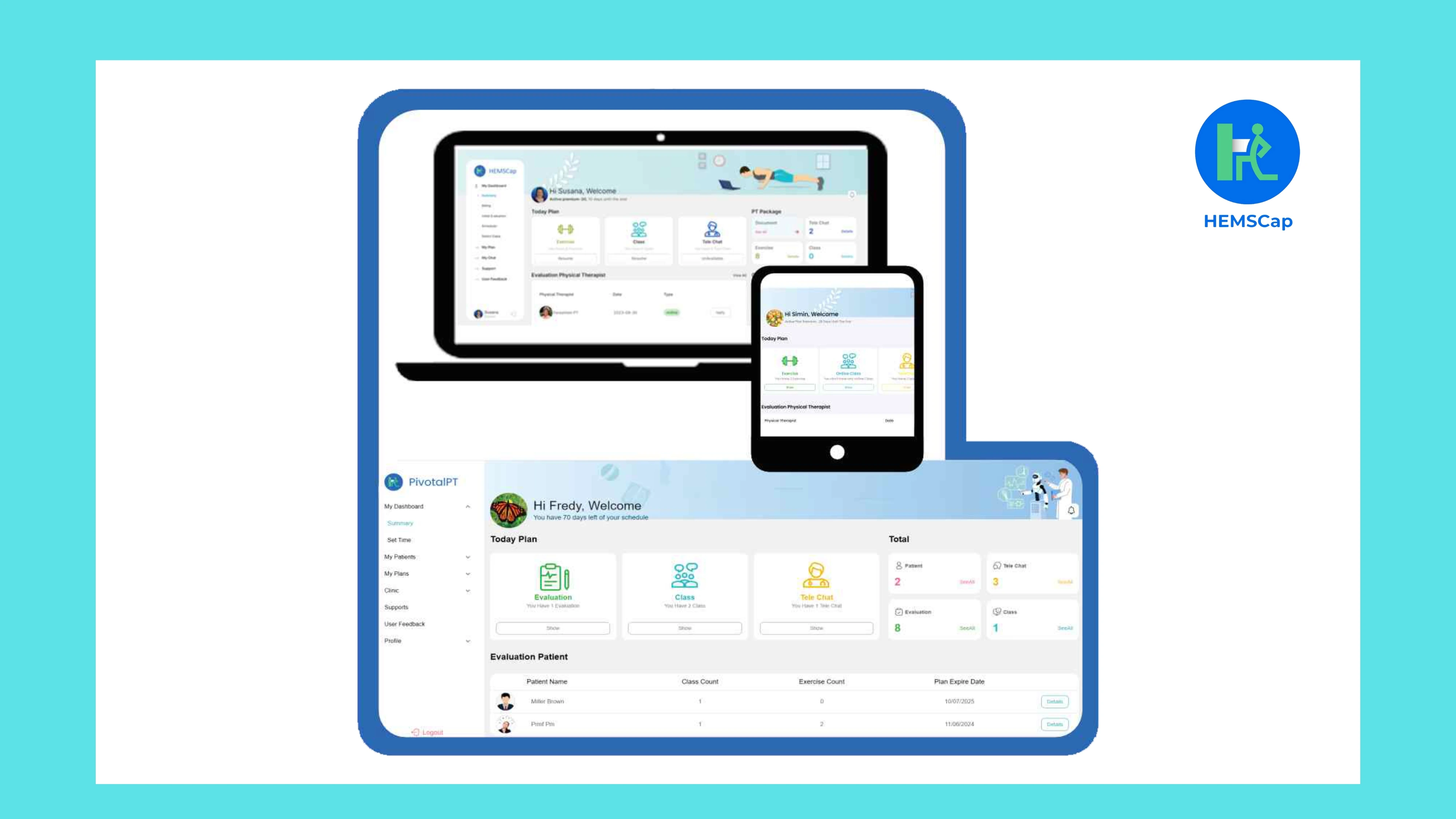
HEMSCap is an example of a real-world Physical Therapy Software platform designed to address practical challenges faced by clinics and therapists. Rather than focusing on isolated features, HEMSCap integrates multiple capabilities into a unified digital environment.
The platform combines AI-powered motion analysis, smart documentation, and remote care support to enhance both clinical accuracy and workflow efficiency. Its design reflects the actual needs of physical therapy professionals, emphasizing usability and clinical relevance.
By supporting data-driven treatment and reducing administrative workload, HEMSCap demonstrates how Physical Therapy Software can be applied effectively in everyday clinical practice.
Choosing the Right Physical Therapy Software for Your Clinic
Assess Clinical and Operational Needs
- Clinics should evaluate their current workflows and identify inefficiencies.
- The selected software should directly address these specific challenges.
Scalability and Long-Term Use
- A Physical Therapy Software solution should be able to grow with the clinic.
- Scalability prevents the need for system replacement as patient volume increases.
Training and Ongoing Support
- Proper onboarding and continuous support are essential for successful adoption.
- Even advanced software requires effective training to deliver its full value.
Challenges and Considerations in Implementation
Adoption by Clinical Staff
- Therapists may initially resist changes to established workflows.
- Clear communication and training can help overcome this barrier.
Data Security and Compliance
- Protecting patient data is a critical responsibility for clinics.
- Physical Therapy Software must meet relevant data protection standards.
Integration With Existing Systems
- Clinics may already use billing or electronic health record tools.
- Compatibility and integration capabilities should be evaluated carefully.
Final Thoughts
Physical Therapy Software has become a foundational component of modern physical therapy clinics. By supporting efficient workflows, enhancing clinical decision-making, and enabling digital care models, these platforms help clinics deliver higher-quality services in an increasingly complex healthcare environment.
As technology continues to advance, Physical Therapy Clinic Software will play an even greater role in shaping patient-centered and data-driven rehabilitation. Platforms like HEMSCap illustrate how thoughtful software design can translate technological innovation into meaningful clinical impact.
Clinics that invest in the right Physical Therapy Software are better positioned to improve outcomes, optimize resources, and adapt to the future of physical therapy care.
FAQ – Frequently Asked Questions
1. What is the main purpose of Physical Therapy Software?
Physical Therapy Software is designed to support clinical care, documentation, scheduling, and patient management in physical therapy clinics.
2. Is Physical Therapy Software suitable for small clinics?
Yes, many platforms are scalable and can be adapted to clinics of different sizes and patient volumes.
3. How does AI improve Physical Therapy Software?
AI enhances movement analysis, supports personalized treatment planning, and provides data-driven insights into patient progress.
4. Does Physical Therapy Software replace physical therapists?
No, these systems are tools that support therapists by improving efficiency and clinical accuracy.
5. Why is HEMSCap considered a relevant Physical Therapy Software solution?
Because it focuses on real clinical needs, integrates AI-based tools, and supports both in-clinic and remote physical therapy workflows.