•
2026/02/09•HEMSCap Content Writer
Transforming Physical Therapy with AI-Powered Rehabilitation: From Clinic to Home-Based Care
Introduction
Traditional physical therapy faces significant limitations. Patients often need frequent in-clinic visits, progress monitoring can be inconsistent, and personalized exercise plans are limited. AI-Powered Rehabilitation transforms these challenges into opportunities. By leveraging precise motion analysis, real-time feedback, and tailored treatment programs, artificial intelligence is redefining the patient experience. Platforms like HEMSCap are already implementing these technologies, supporting both therapists and patients effectively.
Moreover, AI enables therapists to make informed decisions based on objective data rather than subjective observation alone. This enhances the efficiency of treatment plans and reduces the likelihood of errors in exercise execution. Patients benefit from increased engagement and motivation, as progress is tracked and visually represented through interactive interfaces. As healthcare increasingly embraces digital transformation, AI-Powered Rehabilitation represents a significant step forward in delivering high-quality, personalized care to diverse patient populations.
In addition, the growing adoption of telehealth and remote care models has increased the demand for reliable digital rehabilitation tools. AI-powered systems help bridge the gap between in-clinic sessions by offering continuous performance tracking and structured feedback outside traditional treatment settings. This shift supports long-term adherence to therapy programs and aligns with evidence-based practices in modern physical therapy.
What Is AI-Powered Rehabilitation?
Definition and Core Technologies
AI-Powered Rehabilitation refers to the use of artificial intelligence to enhance physical therapy programs. Core technologies include:
- Motion Analysis: Captures and evaluates patient movements with high precision.
- Computer Vision: Tracks and interprets complex physical actions accurately.
- Data-Driven Feedback: Provides real-time guidance to both patients and therapists.
Unlike simple digital exercise apps, AI-Powered Rehabilitation processes complex datasets and delivers precise, actionable feedback.
Why AI Is Transforming Physical Therapy
Limitations of Traditional Rehabilitation Models
- Dependence on in-clinic presence
Patients must attend multiple sessions, which can be time-consuming and sometimes inaccessible.
- Human error in movement assessment
Therapists’ evaluations can vary based on workload or experience, leading to inconsistent results.
- Limited continuous monitoring
Tracking patient progress outside the clinic environment is challenging and often incomplete.
How AI Solves These Challenges
- Real-time, data-driven motion analysis
Sensors and cameras capture patient movements, and AI interprets them with high accuracy.
- Continuous monitoring without fatigue
AI systems can track patient progress 24/7, ensuring consistent feedback and guidance.
- Personalized rehabilitation programs
Algorithms analyze movement patterns to design exercises tailored to each patient’s needs and progress.
Key Benefits of AI-Powered Rehabilitation
- Improved Movement Accuracy
Real-time feedback ensures patients perform exercises correctly, reducing the risk of injury.
- Personalized Rehabilitation Programs
AI tailors exercise plans to individual needs, adapting dynamically as the patient progresses.
- Remote and Home-Based Therapy
Patients can safely perform exercises at home while AI monitors performance and progress.
- Data-Driven Clinical Decisions
Therapists receive actionable insights based on accurate, continuous data.
- Reduced Workload for Therapists
Documentation and monitoring are automated, freeing therapists to focus on patient care.
Real-World Applications in Physical Therapy
Clinical Settings
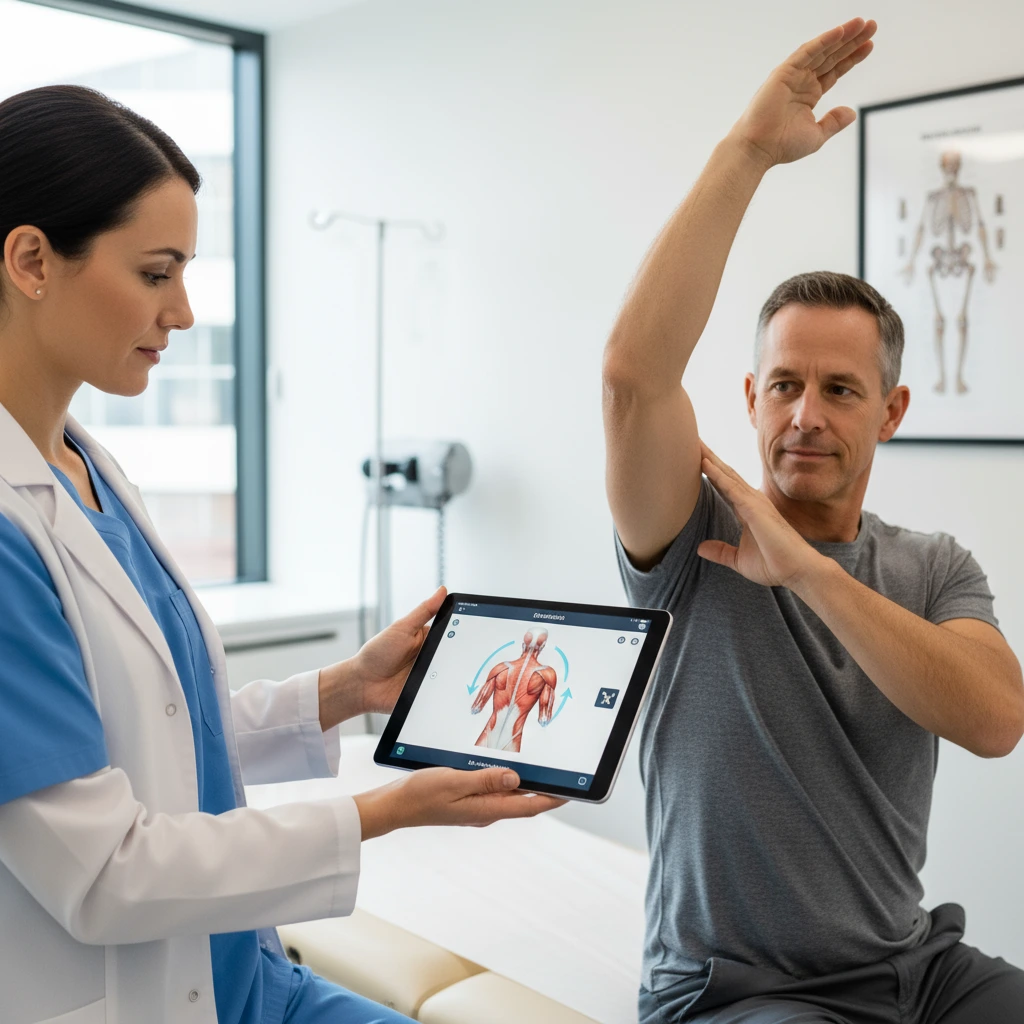
AI assists therapists in accurately assessing patient movements, tracking progress, and minimizing human error during rehabilitation.
Home-Based Rehabilitation
With AI, patients can safely perform exercises at home while receiving real-time guidance, ensuring compliance and effective therapy.
Education and Training
Physical therapy students benefit from AI-powered platforms to practice, analyze movements, and learn advanced rehabilitation methods.
The Role of HEMSCap in AI-Powered Rehabilitation
HEMSCap is a real-world digital health platform implementing AI in physical therapy. Its key features include:
- Precise Real-Time Motion Analysis
Patients and therapists can accurately track and evaluate exercise performance.
This real-time analysis allows immediate correction of movement errors, reducing the risk of injury and ensuring exercises are performed optimally for recovery.
- Smart Documentation
Automated generation of clinical reports like SOAP Notes saves therapists time and ensures accuracy. It also enables seamless record-keeping, allowing therapists to review patient progress over time and make informed adjustments to treatment plans efficiently.
- Personalized Treatment Programs
Using collected data, HEMSCap adjusts exercises based on each patient’s unique needs and progress.
This ensures that therapy is tailored to individual capabilities, enhancing patient engagement and accelerating the rehabilitation process.
HEMSCap functions as a decision-support tool rather than replacing therapists, improving both quality and efficiency of care. It empowers therapists with actionable insights while maintaining human oversight, ensuring AI complements rather than replaces clinical judgment.
Clinical Accuracy and Ethical Considerations
- Data Privacy
Patient information must be securely stored and protected.
- Therapist’s Role Remains Essential
AI supports but does not replace clinical decision-making, ensuring human oversight.
- Patient Safety
All AI-recommended programs require clinical validation before implementation to maintain safety.
Future of AI-Powered Rehabilitation
Rapid growth of data-driven, AI-based rehabilitation technologies.
Integration of AI with wearable devices for enhanced feedback and monitoring.
Expanding global access to high-quality, affordable physical therapy.
Final Thoughts
AI-Powered Rehabilitation is not a passing trend but a sustainable advancement in physical therapy. It allows therapists to enhance precision, efficiency, and patient engagement, while patients benefit from personalized, safe, and accessible care. Platforms like HEMSCap provide a real-world example of how AI can elevate rehabilitation quality, supporting both therapists and patients in achieving optimal outcomes.
Furthermore, AI-Powered Rehabilitation encourages evidence-based practice by providing therapists with comprehensive data analytics on patient performance and progression. This approach not only improves clinical decision-making but also helps identify potential risks or areas needing targeted intervention early. By integrating AI tools into everyday physical therapy routines, clinics can streamline workflow, reduce administrative burden, and focus more on patient-centered care. As technology evolves, combining AI with wearable devices and remote monitoring will expand access to rehabilitation services globally. Ultimately, embracing AI-Powered Rehabilitation fosters a more efficient, precise, and patient-focused healthcare ecosystem, enhancing recovery outcomes and long-term wellness.
In clinical practice, the adoption of AI-powered tools requires proper training and gradual integration into existing workflows. Successful implementation depends on aligning technology with clinical guidelines, regulatory requirements, and therapist expertise. When used responsibly, AI can enhance consistency in care delivery without compromising clinical judgment. It also supports standardized outcome measurement, which is essential for evaluating treatment effectiveness across different patient populations. As more clinical data becomes available, these systems can further improve accuracy and adaptability. Ultimately, AI-Powered Rehabilitation strengthens the foundation of modern physical therapy by supporting safer, more informed, and more scalable care models.
FAQ About AI-Powered Rehabilitation
1. What is AI-Powered Rehabilitation?
It is a rehabilitation approach that uses artificial intelligence to analyze movements, provide real-time feedback, and design personalized therapy programs.
2. Will AI replace physical therapists?
No, AI serves as a supportive tool. Final decisions and clinical judgment remain with the therapist.
3. Is AI-Powered Rehabilitation safe for home-based therapy?
Yes, intelligent algorithms and continuous monitoring ensure safe and effective home exercise programs.
4. What role does HEMSCap play in digital rehabilitation?
HEMSCap provides motion analysis, smart documentation, and personalized treatment planning to assist therapists in clinical decision-making.
5. Is AI reliable in clinical physical therapy?
Yes, when combined with real patient data and therapist supervision, AI delivers accurate and dependable clinical insights.