•
2026/02/09•HEMSCap Content Writer
How Artificial Intelligence is Transforming Learning for PT Students
Introduction
Learning physical therapy requires a careful balance of theoretical knowledge, practical training, and clinical skills. PT students face multiple challenges, including understanding patient movements accurately, performing exercises correctly, and documenting outcomes. These challenges significantly affect student success and the quality of education.
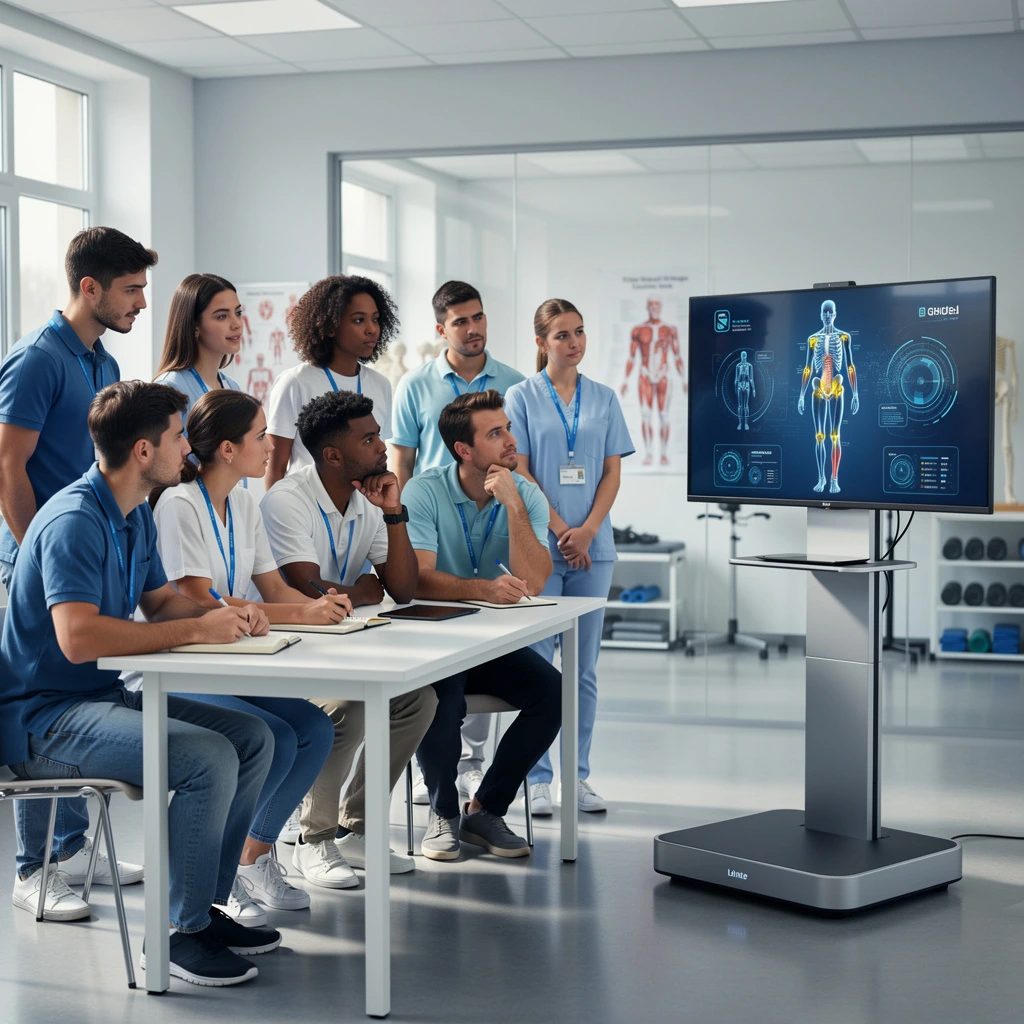
In recent years, artificial intelligence (AI) has emerged as a powerful tool in medical and rehabilitation education. For PT students, integrating AI into their learning journey can transform their experience, improving accuracy, efficiency, and motivation. Platforms like HEMSCap provide smart, digital solutions that allow students to practice exercises remotely while receiving real-time feedback, bridging the gap between classroom theory and practical application.
As the demand for high-quality physical therapy education grows, academic programs are increasingly looking for ways to bridge the gap between theory and hands-on clinical practice. Traditional teaching methods alone are often not enough to provide consistent, individualized feedback for every student.
AI-powered tools help address this gap by offering objective movement analysis and structured performance insights. For PT students, this means earlier exposure to clinical reasoning, better understanding of biomechanics, and more efficient skill development. Rather than replacing educators, AI supports learning by reinforcing correct techniques and highlighting areas that require improvement.
The Role of AI in Physical Therapy Education
Enhancing Practical Learning with Intelligent Simulators
One of the main benefits of AI for PT students is its ability to provide realistic simulation environments for practice. AI systems can analyze patient movements and give precise feedback on exercise performance. This allows students to refine their practical skills without fear of mistakes, which is particularly valuable in the early stages of clinical training.
Moreover, intelligent simulators can replicate diverse clinical scenarios. This exposes students to a wider range of patient conditions than traditional practical classes allow, helping them gain experience and confidence in handling real-world situations.
Improving Data Analysis and Performance Assessment
AI can monitor student performance with remarkable accuracy. By collecting movement and physiological data, it identifies strengths and weaknesses and offers actionable recommendations. This data-driven approach not only improves learning quality but also streamlines student evaluation and provides objective measures of skill development.
Students can track their daily progress using AI-generated reports and adjust their practice plans based on intelligent feedback. This level of insight motivates students and encourages continuous improvement in their clinical abilities.
Innovative AI Tools for PT Students
Introducing HEMSCap
One of the most notable AI tools for PT students is HEMSCap. This comprehensive platform digitizes and automates physical therapy exercises, offering real-time guidance and remote training capabilities.
With HEMSCap, students can complete exercises at home or in any suitable environment while receiving AI-generated feedback on their performance. The platform also generates automated reports on student progress, which are invaluable for assessment and documentation purposes.
Complementary Learning Tools
In addition to HEMSCap, other AI-based tools support practical learning. Motion simulators, intelligent feedback apps, and advanced performance analysis systems allow students to practice with greater accuracy and fewer errors.
These tools enhance student confidence and enable them to apply skills effectively in clinical settings. AI also improves communication between instructors and students, allowing immediate correction and guidance during training.
Benefits of AI for PT Students
- Faster and More Accurate Learning
AI feedback ensures exercises are performed correctly, reducing common errors and improving skill acquisition.
Students can spend more time practicing and refining essential clinical techniques.
- Access to Remote Learning
Students can perform practical exercises and receive real-time feedback even without being physically present in a clinic.
This is particularly useful in situations with limited access to clinical facilities or during public health crises.
- Automated Documentation and Reporting
AI generates precise, professional reports of student performance.
This reduces the time spent on paperwork and allows students to focus on hands-on learning.
- Enhanced Motivation and Engagement
AI-driven tools gamify exercises and present challenges that encourage active participation.
Immediate feedback and visible progress increase student engagement and motivation.
Practical Examples of AI in PT Education
- Using HEMSCap for Core, Shoulder, and Knee Exercises
Students can record their movements and receive instant AI feedback.
This feedback helps correct errors and reinforces proper techniques.
- Personalized Training Programs
AI creates individualized exercise plans based on performance data.
Plans are tailored to each student’s skill level and areas that need improvement.
- Daily Progress Monitoring
Students can track their performance over time with detailed reports.
This enhances confidence and encourages self-directed learning.
Challenges and Limitations
- Need for Adequate Equipment and Reliable Internet
Optimal AI experiences require appropriate devices and stable internet connections.
Without these resources, feedback accuracy and user experience may be compromised.
- Initial Familiarity with Technology
Students must undergo basic training to use AI platforms effectively.
Understanding software functionality is essential for maximizing benefits.
- Upfront Costs
AI tools often require investment, although student-friendly or educational versions are frequently available.
Initial costs are generally offset by improved learning outcomes and efficiency.
Final Thoughts
Integrating AI for PT students into physical therapy education is a transformative and essential strategy for enhancing both theoretical and practical learning. Tools like HEMSCap allow students to refine clinical skills, minimize common mistakes, and gain practical experience more effectively than traditional methods alone.
By incorporating AI, students gain access to real-time feedback, automated reporting, and personalized practice plans. This integration not only improves learning outcomes but also increases engagement, confidence, and motivation. Ultimately, AI empowers PT students to achieve higher competency levels, preparing them for successful professional practice.
Furthermore, AI enables students to stay updated with the latest rehabilitation techniques and clinical guidelines, fostering a culture of continuous learning. It also helps educators identify areas where students may struggle, allowing timely interventions and targeted support. By combining AI tools with traditional instruction, PT students can experience a more comprehensive and efficient learning journey that bridges theory and practice seamlessly.
From an educational perspective, AI also supports standardized skill assessment by providing objective performance data across different learning environments. This consistency helps reduce variability in practical training and ensures that students are evaluated based on measurable criteria rather than subjective observation alone.
In addition, early exposure to AI-driven tools prepares PT students for modern clinical settings where digital health technologies are becoming increasingly common. Developing familiarity with these systems during education allows students to transition more smoothly into professional practice. When used responsibly and alongside expert instruction, AI becomes a practical extension of evidence-based physical therapy education rather than a replacement for clinical judgment.