•
2026/02/08•HEMSCap Content Writer
AI Movement Analysis: The Future of Optimized Physical Therapy Care
Introduction
In today’s world, precise human movement analysis is a cornerstone of effective physical therapy. With advancements in Artificial Intelligence (AI), modern motion analysis systems can evaluate movements in real time, detect incorrect patterns, measure performance, and provide evidence-based feedback. This technology, known as AI Movement Analysis, is revolutionizing how physical therapists assess and treat patients.
AI-based movement analysis allows physical therapists to understand complex motion patterns, track patient progress accurately, and tailor treatment plans more effectively. In this article, we will explore the fundamentals of AI Movement Analysis, its real-world applications, advantages, challenges, and how innovative platforms like HEMScap are leveraging this technology to improve outcomes.
What is AI Movement Analysis?
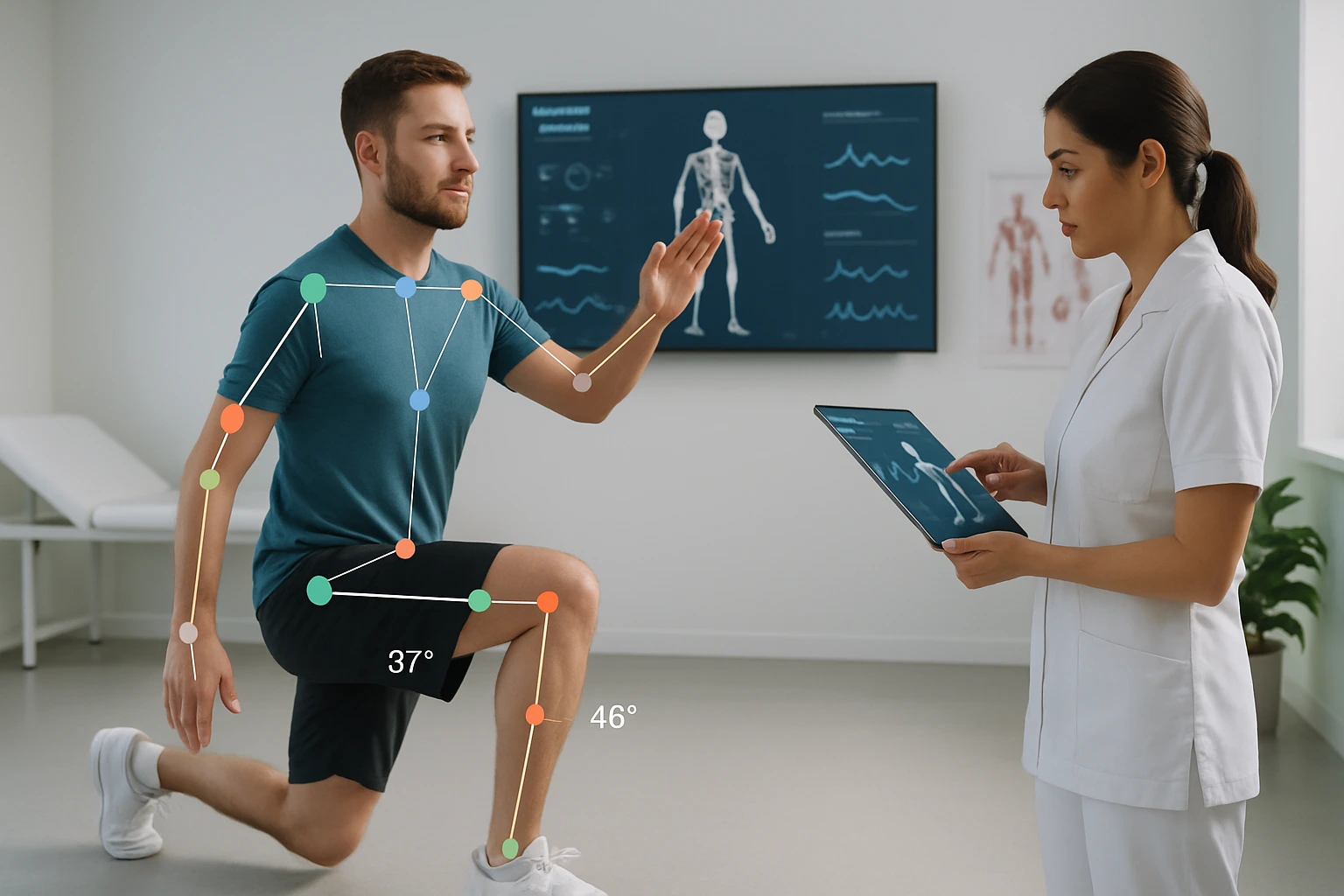
AI Movement Analysis uses advanced algorithms and technologies to analyze human motion with precision. Leveraging computer vision, pose estimation, and biomechanical data, AI can measure joint angles, detect subtle movement deviations, and identify mobility issues. This type of analysis allows therapists to capture detailed information about how each joint and muscle functions during movement, providing an objective view that was previously difficult to obtain outside of specialized labs.
Historically, motion analysis required expensive equipment, motion-capture cameras, and highly controlled lab environments. Today, AI enables the use of ordinary cameras, tablets, or wearable sensors to perform real-time motion assessment. This not only reduces cost but also makes motion analysis more accessible to clinics, therapists, and patients at home. In this approach, no patient video recordings are stored or retained. All assessments are performed entirely in real time, and the analysis is based solely on data generated through AI-based movement markers. By relying on these markers rather than saved video files, patient privacy is effectively preserved throughout the assessment process.
AI Movement Analysis works by capturing video or sensor data and processing it through machine learning models that recognize patterns, detect asymmetries, and quantify movement efficiency. These systems can also compare a patient’s performance against standardized benchmarks, highlighting areas that need improvement and providing therapists with actionable insights.
Beyond simply measuring movement, AI can track progress over time, identify trends, and predict potential injuries by recognizing patterns that precede common musculoskeletal problems. For example, minor deviations in gait or posture may be detected before they lead to chronic pain or injury, allowing therapists to intervene proactively.
In addition, AI Movement Analysis supports personalized rehabilitation programs. By understanding the unique biomechanics of each patient, therapists can design exercises that target weak or imbalanced muscles, optimize joint loading, and ensure movements are performed safely. This precision is especially valuable in physical therapy, where even small errors in technique can affect recovery outcomes.
Applications of AI Movement Analysis in Physical Therapy
Accurate Performance Assessment
AI can precisely measure joint angles, movement patterns, and asymmetries. This objective data is invaluable for physical therapists, enabling them to design more effective treatment programs.
Real-Time Feedback
AI systems can monitor patient movements in real time and provide immediate feedback if a movement is incorrect or potentially harmful. This accelerates improvement and reduces the risk of injury.
Remote Care and Telehealth
AI movement analysis enables patients to perform exercises at home while therapists monitor progress remotely. This is particularly valuable for telehealth programs and patients with limited access to clinics.
HEMScap: Real-World AI Tools for Physical Therapy
One of the pioneering platforms in this field is HEMScap, which integrates AI technology into physical therapy to improve movement feedback, patient monitoring, and workflow efficiency.
PivotalPT
PivotalPT is an AI-powered digital platform for physical therapy that offers real-time feedback, performance assessment, virtual group classes, and progress reporting. Clinics can deliver more precise evaluations and exercise programs, while patients can stay on track with their treatment at home.
HildaCoach
HildaCoach leverages AI to provide personalized exercise programs with real-time monitoring, ensuring patients perform exercises correctly at home. Therapists gain valuable insights into patient performance and adherence.
GeniusPT
GeniusPT focuses on automated documentation and clinical note-taking, using AI to generate SOAP notes accurately and efficiently. This tool saves therapists over 40 hours per month, allowing them to dedicate more time to patient care.
Benefits and Challenges of AI Movement Analysis
Benefits
Data Accuracy and Objectivity
AI Movement Analysis captures precise motion data, making treatment outcomes measurable and objective.
Patient Empowerment
Patients can perform exercises anytime, anywhere, and receive instant feedback, increasing engagement and adherence to treatment plans.
Challenges
Privacy Concerns
Using video and biomechanical data requires strong policies to protect patient privacy and data security.
Training and Adoption
Therapists must understand AI tools and outputs to apply the data effectively in clinical decision-making.
Final Thoughts
AI Movement Analysis is transforming physical therapy by offering objective data, real-time feedback, and remote monitoring capabilities. Platforms like HEMScap demonstrate the practical benefits of AI, using computer vision, machine learning, and advanced analytics to deliver innovative solutions for patient care. By integrating AI into physical therapy, clinicians can enhance treatment precision, optimize outcomes, and empower patients to participate actively in their recovery.
Moreover, AI-based motion analysis can help identify potential injuries before they occur, allowing therapists to design preventive programs tailored to each patient. It also streamlines clinic workflows, reducing administrative burden and freeing up more time for hands-on patient care. With the ability to track long-term progress, therapists can adjust interventions dynamically, ensuring continuous improvement. As technology evolves, the combination of AI, wearable devices, and telehealth will make physical therapy more accessible, personalized, and effective than ever before.
FAQ
1. What is AI Movement Analysis and how does it work?
AI Movement Analysis evaluates and measures human motion using AI algorithms and computer vision to identify patterns, detect errors, and track performance accurately.
2. Is AI Movement Analysis only used in clinics?
No, AI movement analysis can also be used at home or in telehealth sessions, providing patients with flexible exercise options while enabling therapists to monitor remotely.
3. What products does HEMScap offer?
HEMScap provides tools like PivotalPT, HildaCoach, and GeniusPT, covering AI-based motion analysis, exercise coaching, and automated documentation.
4. Does AI Movement Analysis require specialized equipment?
Many systems can operate using standard cameras or computers, but advanced applications may use dedicated sensors for higher accuracy.
5. How effective is AI Movement Analysis in improving treatment outcomes?
Research and modern tools show that AI can significantly increase the accuracy of motion assessment and provide valuable feedback, enhancing the overall quality of physical therapy.