•
2026/07/15•HEMSCap Content Writer
How Smart Physical Therapy Data Analytics is Transforming Rehabilitation and AI-Driven Care Systems
Introduction
The healthcare industry is undergoing a major transformation driven by artificial intelligence, data-driven decision-making, and digital rehabilitation platforms. One of the most impactful innovations in this space is smart physical therapy data analytics, a technology that combines motion analysis, machine learning, and clinical data to improve patient outcomes in physical therapy.
Traditionally, physical therapy has relied heavily on in-person assessments and subjective evaluations by clinicians. While effective, this approach often lacks continuous monitoring, scalability, and objective measurement. Today, advanced analytics systems are changing this model by enabling real-time tracking of patient movement, automated reporting, and AI-supported treatment planning.
Companies such as HEMSCap are playing a key role in this evolution by developing AI-powered platforms that analyze human movement through computer vision and provide actionable insights for clinicians and patients alike. This shift is not only improving rehabilitation efficiency but also expanding access to care through remote physical therapy solutions.
What Is Smart Physical Therapy Data Analytics?
Smart physical therapy data analytics refers to the use of artificial intelligence, motion tracking systems, and data processing tools to evaluate patient movement, treatment effectiveness, and rehabilitation progress.
Instead of relying solely on manual observation, these systems collect structured data from exercises and convert it into meaningful insights.
Key components include:
- Motion tracking using computer vision
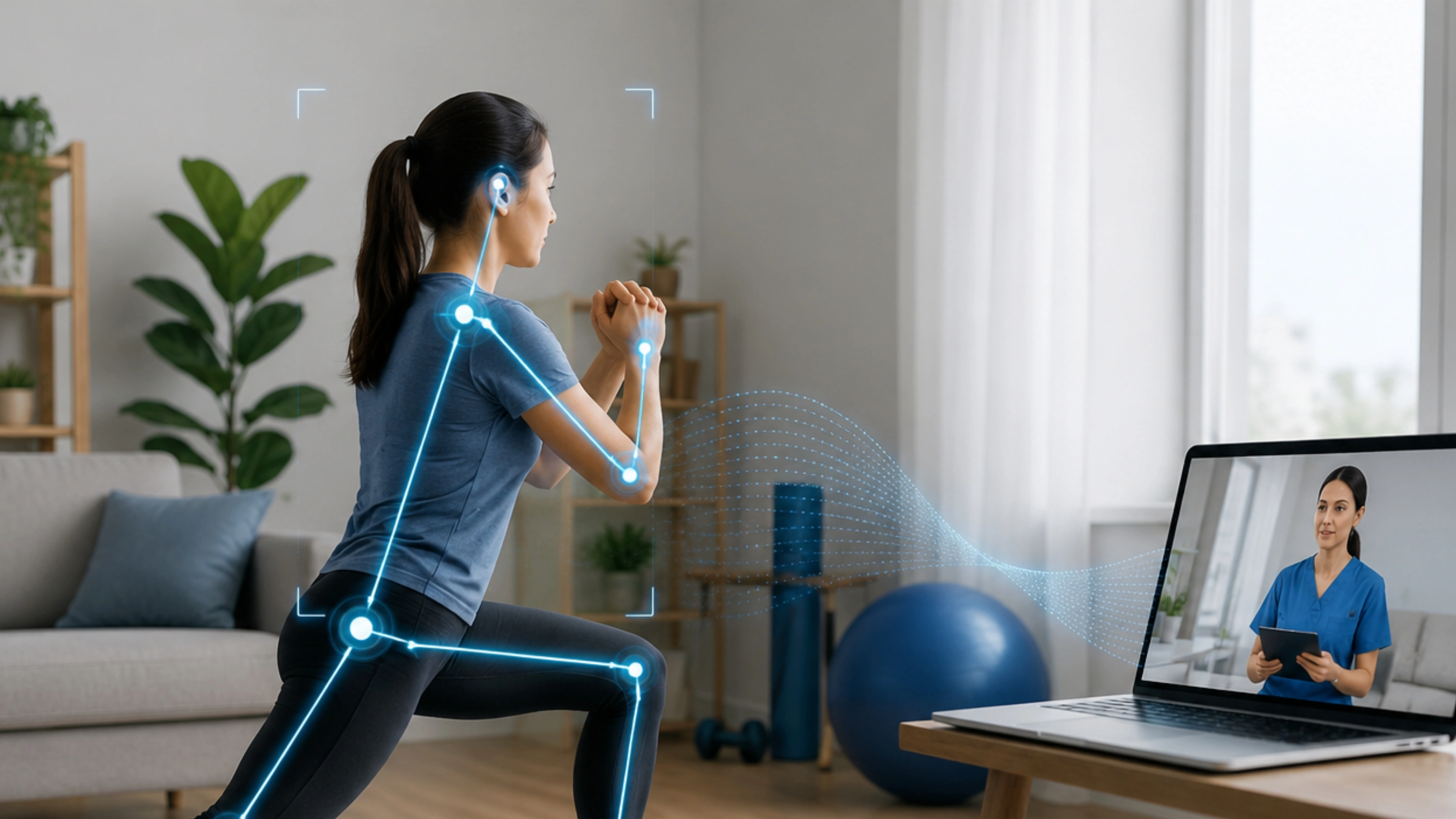
- This allows systems to analyze body movements without wearable sensors, using only cameras and AI models to detect posture, alignment, and range of motion.
- Machine learning-based evaluation models
- These models learn from large datasets of movement patterns to identify improvements, compensations, or risks during rehabilitation exercises.
- Real-time feedback systems
- Patients receive instant corrections during exercises, improving accuracy and reducing the risk of injury.
- Clinical data integration
- Therapy data is automatically organized into reports that clinicians can use for decision-making and progress tracking.
Why Data Analytics Matters in Physical Therapy
The integration of data analytics into physical therapy is reshaping how clinicians deliver care and how patients experience rehabilitation.
Benefits of data-driven rehabilitation:
- Objective measurement of progress
- Data replaces subjective observation, allowing clinicians to track precise improvements over time.
- Improved treatment personalization
- Therapy plans can be adjusted based on real performance data rather than assumptions.
- Reduced clinical workload
- Automation of documentation and reporting saves time for healthcare professionals.
- Enhanced patient engagement
- Patients receive clearer feedback, increasing motivation and adherence to exercise programs.
Role of AI in Smart Physical Therapy Systems
Artificial intelligence is the backbone of modern physical therapy analytics systems. It enables platforms to process complex movement data and generate actionable insights.
AI capabilities in rehabilitation:
- Movement pattern recognition
- AI detects correct and incorrect movement execution in real time.
- Predictive recovery analysis
- Systems estimate recovery timelines based on patient progress data.
- Automated clinical reporting
- AI generates structured therapy notes, reducing administrative burden.
- Remote patient monitoring
- Clinicians can track patients outside clinical environments, supporting telehealth models.
HEMSCap and AI-Driven Rehabilitation Innovation
HEMSCap is an emerging HealthTech company focused on building AI-powered solutions for physical therapy and rehabilitation. Its platform integrates computer vision and smart analytics to support both clinicians and patients.
One of its key innovations includes systems that allow patients to perform exercises at home while receiving real-time feedback through AI-driven motion analysis.
HEMSCap’s approach reflects the broader shift toward smart physical therapy data analytics, where treatment is no longer limited to clinic visits but extended into continuous digital care environments.
The company’s tools help clinicians:
- Monitor patient progress remotely
- Automate documentation tasks
- Improve accuracy in exercise evaluation
- Scale rehabilitation services efficiently
This combination of AI and physical therapy data analytics represents a major step toward fully digital rehabilitation ecosystems.
Applications of Smart Physical Therapy Data Analytics
1. Clinical Rehabilitation
Smart analytics systems assist therapists in evaluating recovery progress after injuries or surgeries.
- They provide objective movement assessments
- These assessments help clinicians identify subtle improvements that may not be visible to the human eye.
- They improve treatment decision-making
- Data-driven insights help optimize therapy plans for faster recovery outcomes.
2. Home Exercise Programs (HEP)
Patients can perform guided exercises at home with AI feedback.
- Ensures correct exercise execution
- Real-time correction reduces improper movement patterns.
- Increases adherence to therapy plans
- Patients are more likely to complete exercises consistently.
3. Remote Physical Therapy (Tele-rehabilitation)
AI-powered systems enable therapists to monitor patients remotely.
- Reduces the need for in-person visits
- This improves accessibility for patients in remote areas.
- Supports continuous rehabilitation
- Patients receive ongoing monitoring outside clinical environments.
4. Performance Optimization in Sports Medicine
Athletes use data analytics to improve movement efficiency and prevent injuries.
- Detects biomechanical imbalances
- Early detection reduces injury risk during training.
- Enhances performance tracking
- Coaches can adjust training programs based on precise movement data.
Challenges in Implementation
Despite its benefits, smart physical therapy data analytics faces several challenges:
- Data privacy concerns
- Sensitive patient movement data must be securely stored and processed.
- Clinical adoption barriers
- Some healthcare providers may resist transitioning to digital systems.
- Technology accessibility
- High-quality motion tracking requires reliable devices or camera systems.
- Standardization issues
- Lack of universal data standards can limit interoperability between systems.
Future of Physical Therapy Analytics
The future of rehabilitation will be increasingly data-driven and AI-assisted. Smart physical therapy systems will continue to evolve toward fully autonomous monitoring and predictive healthcare models.
We can expect:
- Fully automated rehabilitation programs
- Integration with wearable and camera-based systems
- Advanced predictive recovery modeling
- Expansion of remote care ecosystems
Companies like HEMSCap are contributing to this future by building scalable AI infrastructure for rehabilitation and clinical automation.
Scientific Insight
A relevant study published on Google Scholar highlights the growing role of machine learning in rehabilitation and physical therapy analytics. The research emphasizes how AI-based systems can improve movement assessment accuracy and support clinical decision-making through data-driven insights.
This aligns with the development of smart physical therapy data analytics systems, which aim to bridge the gap between traditional therapy and digital healthcare solutions.
https://scholar.google.com/scholar?q=machine+learning+in+physical+therapy+rehabilitation+motion+analysis
Final Thoughts
Smart physical therapy data analytics is redefining the future of rehabilitation by combining artificial intelligence, motion tracking, and clinical data into a unified digital ecosystem. This technology enhances treatment accuracy, reduces clinical workload, and enables remote care models that improve patient access and engagement.
With companies like HEMSCap leading innovation in AI-powered rehabilitation platforms, the industry is moving toward a more connected, data-driven, and efficient healthcare system. As adoption increases, physical therapy will continue to evolve from a largely manual process into a fully intelligent, analytics-powered discipline.
FAQ
1. What is smart physical therapy data analytics?
It is the use of AI and data systems to analyze patient movement, track rehabilitation progress, and improve therapy outcomes.
2. How does AI improve physical therapy?
AI provides real-time feedback, automates reporting, and helps detect movement errors more accurately than manual observation.
3. Is smart physical therapy effective for home rehabilitation?
Yes, it enables patients to perform exercises at home with guided feedback and remote monitoring from clinicians.
4. What role does HEMSCap play in this field?
HEMSCap develops AI-based platforms that analyze movement data and support remote physical therapy and clinical automation.
5. What is the future of physical therapy analytics?
The future includes fully automated rehabilitation systems, predictive recovery models, and expanded telehealth integration.