•
2026/07/14•HEMSCap Content Writer
Intelligent Healthcare Systems: Transforming Physical Therapy and Remote Patient Care
Introduction
In recent years, digital transformation in healthcare has accelerated at an unprecedented pace. Intelligent Healthcare Systems are no longer a futuristic concept; they are now an essential part of modern healthcare infrastructure. These systems leverage artificial intelligence, data analytics, computer vision, and remote monitoring to significantly improve the quality, accessibility, and efficiency of healthcare services.
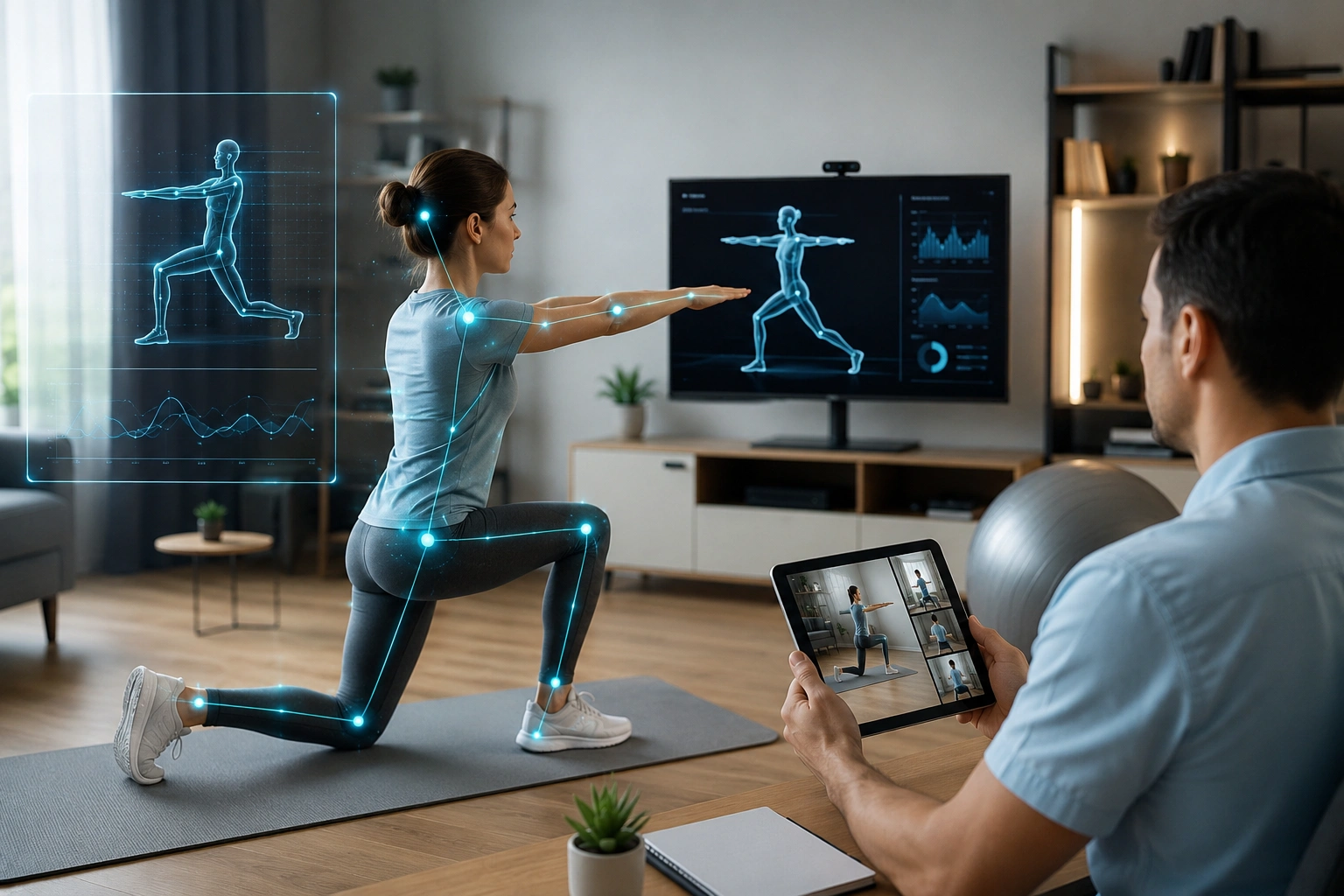
In the field of physical therapy, this transformation is particularly impactful. Therapists can now analyze patient movements remotely, personalize rehabilitation programs, and monitor recovery progress using intelligent platforms. This shift is gradually replacing traditional in-clinic-only models with hybrid digital care systems that combine in-person and remote treatment.
Additionally, healthcare systems worldwide are increasingly shifting toward value-based care models, where patient outcomes and efficiency are prioritized over service volume.
This transition has accelerated the adoption of intelligent technologies in clinical workflows and rehabilitation programs.
In physical therapy, this means greater reliance on data-driven decision-making rather than purely subjective assessments.
As a result, intelligent healthcare platforms are becoming essential tools for improving both clinical accuracy and long-term patient recovery outcomes.
What Are Intelligent Healthcare Systems?
Definition of Intelligent Healthcare Systems
Intelligent Healthcare Systems refer to integrated digital technologies that use:
- Artificial Intelligence (AI)
- Machine Learning (ML)
- Computer Vision
- Internet of Medical Things (IoMT)
- Healthcare Data Analytics
to enhance diagnosis, treatment, and patient care.
The primary goal is not only digitalization but also improving clinical decision-making and delivering personalized healthcare for each patient.
The Role of AI in Physical Therapy
How Artificial Intelligence is Transforming Rehabilitation
Artificial intelligence is reshaping traditional physical therapy by automating assessment, enhancing exercise supervision, and improving patient outcomes through data-driven insights.
Key Benefits of AI in Physical Therapy
- Accurate Motion Analysis
AI-powered computer vision systems can analyze patient movements without requiring wearable sensors.
This allows therapists to assess exercise quality in real time with higher precision.
- Real-Time Feedback During Exercises
AI systems can detect incorrect movement patterns instantly and provide corrective feedback.
This improves exercise accuracy, especially in home-based rehabilitation programs.
- Reduced Documentation Time
AI tools can automatically generate clinical documentation such as SOAP notes and progress reports.
This reduces administrative workload and allows therapists to focus more on patient care.
- Remote Patient Monitoring
With remote monitoring capabilities, therapists can track patient progress outside clinical settings.
This is especially important for chronic conditions and elderly patients.
Importance of Remote Therapeutic Monitoring (RTM)
How RTM Enhances Modern Healthcare Systems
Remote Therapeutic Monitoring (RTM) is a key component of Intelligent Healthcare Systems, enabling continuous tracking of patient activity and adherence to treatment plans.
Benefits of RTM
- Improved Patient Compliance
Continuous monitoring increases patient motivation and adherence to prescribed exercises.
This leads to better rehabilitation outcomes.
- Early Detection of Issues
Therapists can quickly identify incorrect exercise execution or reduced activity levels.
Early intervention helps prevent complications.
- Improved Access to Care
Patients in remote areas or with mobility limitations can receive consistent care without frequent clinic visits.
This improves healthcare accessibility and equity.
- Efficient Clinic Management
Clinics can manage a larger patient base without compromising care quality.
The company HEMSCap is a healthcare technology provider focused on combining artificial intelligence with physical therapy and digital rehabilitation solutions.
Its flagship platform, PivotalPT, is designed for remote rehabilitation and AI-based motion tracking.
Key Features of HEMSCap Solutions
- AI Motion Tracking
Uses computer vision to analyze body movements without requiring wearable devices.
This enables precise evaluation of exercise performance.
- Intelligent Exercise Therapy
The system evaluates exercise execution and provides corrective feedback in real time.
This enhances the quality of home-based rehabilitation.
- Automated Clinical Documentation
AI-generated reports reduce administrative burden and improve workflow efficiency in clinics.
- Remote Therapeutic Monitoring
HEMSCap enables continuous remote tracking of patients, which is a core element of intelligent healthcare systems.
Future of Intelligent Healthcare Systems in Physical Therapy
The Evolution of Digital Rehabilitation
The future of healthcare is moving toward fully integrated, data-driven systems. Intelligent Healthcare Systems will play an increasingly important role in shaping personalized rehabilitation programs and improving clinical efficiency.
In the near future, we can expect:
- More advanced 3D motion tracking systems
- Fully personalized AI-driven treatment plans
- Continuous therapist–patient digital communication
- Home rehabilitation becoming a standard care model
- Fully automated clinical documentation systems
Scientific Research on Intelligent Healthcare Systems
Human–AI Convergence in Modern Medicine
Scientific research shows that artificial intelligence is significantly improving healthcare systems by enhancing clinical decision-making and optimizing patient care workflows. One of the most influential studies in this field is by Eric Topol, who explores the concept of human–AI convergence in modern medicine.
The study emphasizes that AI is not a replacement for healthcare professionals but a powerful tool that enhances their capabilities. In fields such as physical therapy, AI supports more accurate movement analysis and better clinical decision-making.
Final Thoughts
Intelligent Healthcare Systems are fundamentally reshaping the healthcare landscape. By integrating artificial intelligence, data analytics, and remote monitoring technologies, these systems significantly enhance the quality and accessibility of physical therapy services.
Companies like HEMSCap demonstrate how AI-driven healthcare platforms can improve rehabilitation outcomes, streamline clinical workflows, and expand access to care. While traditional healthcare models remain important, the future clearly points toward intelligent, data-driven, and remote-enabled healthcare ecosystems.
Furthermore, the continued advancement of AI technologies is expected to deepen the integration of predictive analytics into rehabilitation workflows.
This will allow clinicians to anticipate patient recovery trajectories with greater accuracy and adjust treatment plans proactively.
Interoperability between healthcare systems will also become increasingly important to ensure seamless data exchange across platforms and providers.
In addition, patient engagement is likely to improve as digital tools become more intuitive and widely adopted in home-based care settings.
Ultimately, the evolution of Intelligent Healthcare Systems will continue to support more efficient, scalable, and outcome-driven healthcare delivery models. Finally, these innovations will further strengthen the collaboration between patients and healthcare providers, creating a more continuous and responsive care experience.
FAQ
1. What are Intelligent Healthcare Systems?
They are digital healthcare systems that use AI and data analytics to improve diagnosis, treatment, and patient care efficiency.
2. How is AI used in physical therapy?
AI analyzes patient movements, provides real-time feedback, and helps improve rehabilitation outcomes through data-driven insights.
3. What is Remote Therapeutic Monitoring (RTM)?
RTM is a system that allows healthcare providers to monitor patients’ therapy progress remotely and continuously.
4. What does HEMSCap do?
HEMSCap provides AI-powered physical therapy solutions, including motion tracking, RTM, and automated clinical documentation.
5. Will Intelligent Healthcare Systems replace therapists?
No. These systems are designed to assist therapists, not replace them, by enhancing accuracy and efficiency in patient care.