•
2026/07/12•HEMSCap Content Writer
Digital Rehabilitation Coaching : Transforming the Future of Physical Therapy and Patient Recovery
Introduction
Rehabilitation is undergoing a major transformation driven by digital health technologies, artificial intelligence and remote patient monitoring. Traditional physical therapy models, which rely heavily on in-person sessions and manual tracking, are gradually being enhanced and in many cases redefined by data-driven digital systems. One of the most impactful developments in this space is Digital Rehabilitation Coaching. This approach combines clinical expertise with intelligent digital tools to guide patients through personalized rehabilitation programs, monitor their progress in real time and improve adherence to therapy protocols. Rather than replacing physical therapists, this model extends their capabilities, enabling continouous care beyond clinic environments and improving outcomes through consistent feedback and structured digital guidance.
In addition, the shift toward digital rehabilitation has been accelerated by the increasing demand for scalable healthcare solutions, especially in aging populations and patients with chronic musculoskeletal conditions.
Healthcare systems are facing pressure to reduce costs while maintaining or improving treatment quality, which makes digital coaching models increasingly relevant.
Modern rehabilitation also benefits from continuous data collection, allowing clinicians to make more informed, evidence-based decisions during the recovery process.
As a result, digital rehabilitation approaches are no longer experimental but are becoming an integrated part of contemporary physical therapy practice in many healthcare settings.
What is Digital Rehabilitation Coaching?
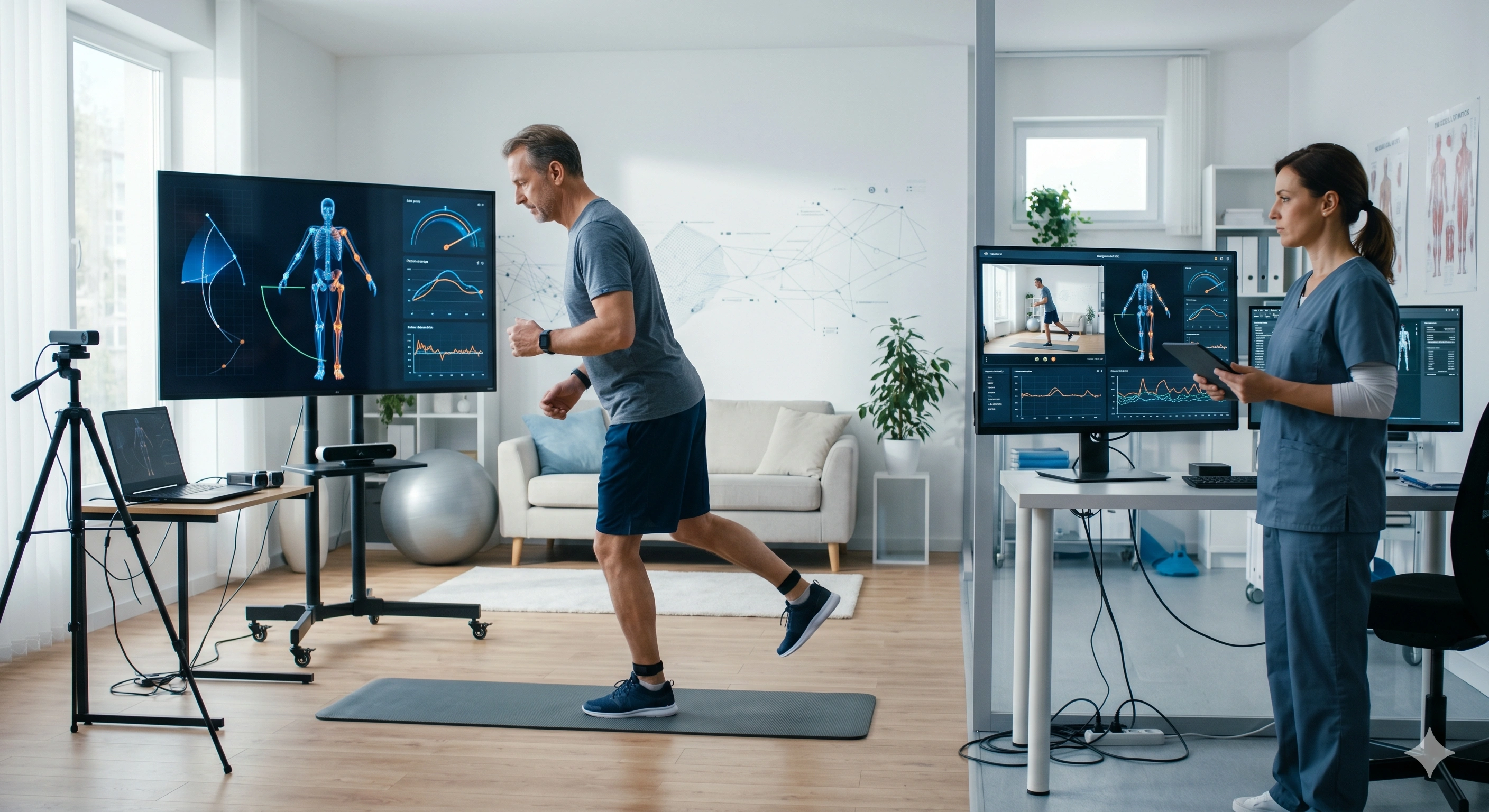
Digital Rehabilitation Coaching refers to the use of digital platforms, artificial intelligence, and remote monitoring systems to guide patients through structured rehabilitation programs. It enhances both clinical efficiency and patient engagement by enabling continuous interaction outside traditional therapy sessions.
Key Characteristics
- Personalized rehabilitation programs
- Each program is tailored to the patient’s condition, recovery stage, and physical capacity, ensuring targeted therapeutic progress.
- Real-time movement tracking
- Digital systems analyze body movements using camera-based or sensor-based technologies to evaluate exercise performance.
- Immediate corrective feedback
- Patients receive instant guidance when exercises are performed incorrectly, improving accuracy and reducing injury risk.
- Remote therapy support
- Rehabilitation can be delivered outside clinical environments, enabling continuity of care at home.
Technologies Behind Digital Rehabilitation Coaching
Artificial Intelligence in Rehabilitation
Artificial intelligence plays a critical role in analyzing movement patterns, identifying errors, and adapting therapy programs dynamically.
Computer Vision Systems
Computer vision enables motion tracking without wearable devices. Standard cameras can analyze posture, joint movement, and exercise execution.
Cloud-Based Health Platforms
Cloud infrastructure allows secure storage and real-time access to patient data, enabling clinicians to adjust therapy remotely.
HEMSCAP and Digital Rehabilitation Coaching
One of the emerging companies contributing to this transformation is HEMSCAP, a health technology platform focused on AI-powered rehabilitation and remote physical therapy solutions.
HEMSCAP integrates motion tracking, digital coaching tools, and data-driven rehabilitation systems to support both clinicians and patients. Its solutions aim to enhance therapy accuracy, improve adherence, and enable scalable remote care delivery.
Benefits of Digital Rehabilitation Coaching
Improved Access to Care
Patients in remote or underserved areas can access rehabilitation services without traveling to clinics, expanding healthcare accessibility.
Reduced Healthcare Costs
Minimizing in-person visits and optimizing therapist time reduces overall treatment expenses.
Higher Accuracy in Exercise Execution
Automated tracking systems provide precise analysis of movement quality and reduce human error.
Increased Patient Adherence
Continuous feedback helps patients stay consistent with rehabilitation programs, improving recovery outcomes.
Reduced Administrative Burden
Digital systems automate documentation and tracking, allowing clinicians to focus more on patient care.
Clinical Applications of Digital Rehabilitation Coaching
Post-Surgical Rehabilitation
Patients recovering from orthopedic or neurological surgeries can continue structured therapy at home with remote monitoring.
Sports Injury Recovery
Athletes benefit from precise movement tracking and performance-based rehabilitation programs.
Chronic Pain Management
Conditions such as lower back pain or joint disorders can be managed more effectively through continuous digital coaching.
Evidence Supporting Digital Rehabilitation Coaching
Recent systematic reviews and meta-analyses highlight the growing effectiveness of technology-driven rehabilitation approaches in improving patient outcomes. A 2024 systematic review published in the Journal of Occupational Rehabilitation examined the impact of telerehabilitation interventions on client outcomes across multiple clinical populations. The study found that digitally delivered rehabilitation services can achieve comparable or, in some cases, improved functional recovery when compared to traditional in-person physical therapy models.
The findings emphasize that structured digital interventions supported by real-time feedback, remote monitoring, and personalized program adjustments can enhance patient engagement and treatment adherence. This evidence strongly supports the clinical feasibility of Digital Rehabilitation Coaching as an effective extension of conventional rehabilitation systems, particularly when integrated with modern AI-based platforms and remote care technologies.
Future of Digital Rehabilitation Coaching
Full Integration with Clinical Workflows
Digital rehabilitation systems will integrate with EMR/EHR platforms for seamless data exchange.
Predictive Rehabilitation Models
Future systems will predict recovery trajectories using AI-driven analytics.
Expansion of Home-Based Care
Healthcare will increasingly shift toward home-based rehabilitation models.
Advanced AI Personalization
AI will continuously adapt rehabilitation programs in real time based on patient performance.
Broader Healthcare Adoption
Digital rehabilitation coaching is expected to become a global standard in physical therapy systems.
Final Thoughts
Digital Rehabilitation Coaching represents a major shift in how physical therapy is delivered and experienced. By combining artificial intelligence, motion tracking, and remote monitoring, it enables more personalized, efficient, and accessible rehabilitation care.
Platforms like HEMSCAP demonstrate how these technologies are already being applied in real clinical environments, supporting therapists and empowering patients through continuous digital engagement.
As healthcare evolves, digital coaching is expected to become a foundational component of modern rehabilitation systems worldwide.
Furthermore, the integration of digital rehabilitation coaching into clinical practice highlights a broader shift toward value-based healthcare delivery.
This approach emphasizes measurable outcomes, patient engagement, and continuous improvement throughout the recovery process.
As digital tools become more sophisticated, they are expected to complement—not replace—the expertise of licensed physical therapists.
The combination of human clinical judgment and AI-supported insights can lead to more precise and adaptive treatment strategies.
Interoperability with existing healthcare systems will also be essential to ensure smooth adoption across clinics and hospitals.
In addition, standardized data collection methods will improve the comparability of rehabilitation outcomes across different patient populations.
Future research is likely to focus on long-term effectiveness, patient satisfaction, and cost-efficiency of digital rehabilitation models.
Overall, digital rehabilitation coaching is positioned to play a central role in shaping more accessible, efficient, and patient-centered rehabilitation systems worldwide.
FAQs
1. What is Digital Rehabilitation Coaching?
It is a digital approach that uses AI and remote monitoring to guide and track rehabilitation programs.
2. Does it replace physical therapists?
No, it enhances their role by extending care beyond clinical settings.
3. What technologies are used?
Artificial intelligence, computer vision, and cloud-based platforms.
4. What is HEMSCAP’s role in this field?
HEMSCAP provides AI-driven rehabilitation tools for remote monitoring and coaching.
5. What is the main advantage?
Improved accessibility, better adherence, and more accurate rehabilitation outcomes.