•
2026/07/11•HEMSCap Content Writer
How Automated Patient Reporting in Physical Therapy is Transforming Clinical Documentation and Care
Introduction
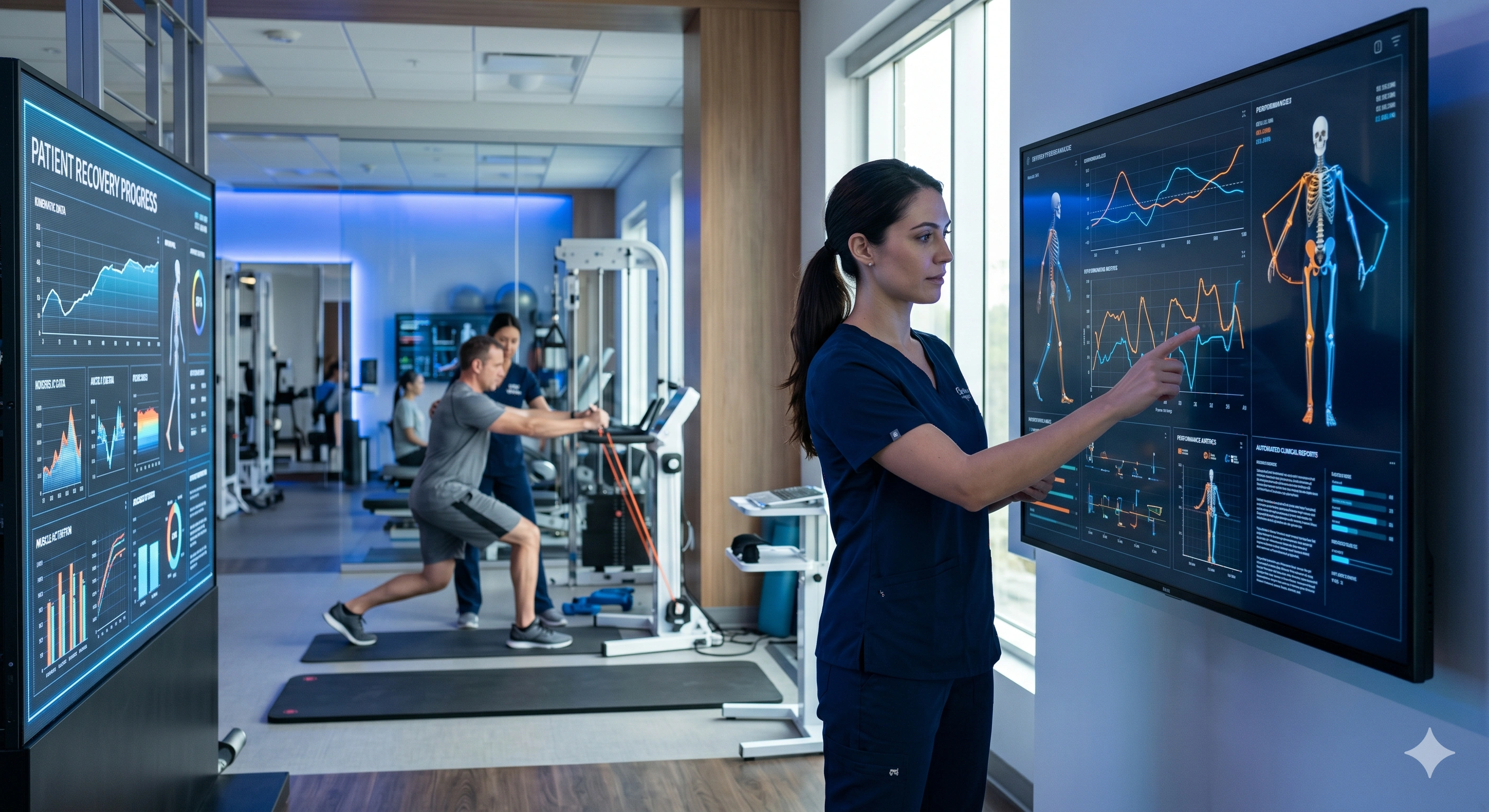
Physical Therapy is undergoing a major digital transformation driven by artificial intelligence, data analytics and remote care technologies. One of the most impactful changes in recent years is the shift toward Automated Patient Reporting in Physical Therapy, a system designed to reduce manual documentation workload while improving accuracy and clinical efficiency.
Traditionally, physical therapists spend a significant portion of their workday writing clinical notes, updating patient progress reports and maintaining detailed records for insurance and compliance purposes. These administrative tasks often reduce the time available for direct patient care and contribute to clinician burnout. With the rise of AI-powered healthcare systems, automated documentation is becoming a practical solution, These systems collect, analyze and organize patient data into structured clinical reports, helping therapists focus more on treatment and less on paperwork.
What is Automated Patient Reporting in Physical Therapy?
Automated Patient Reporting refers to the use of artificial intelligence, digital monitoring tools and data-driven systems to generate clinical documentation without requiring extensive manual input from healthcare providers. Instead of manually writing reports, the system processes data from multiple sources, such as :
- Patient movement tracking during exercises
- Remote therapeutic monitoring (RTM) platforms
- Digital home exercise programs
- Telehealth consultations
These inputs are converted into structured clinical reports that reflect patient progress, adherence and treatment outcomes.
Why it Matters in Modern Healthcare
Automated reporting is becoming increasingly important because healthcare systems are under pressure to improve efficiency while maintaining high-quality care.
Key benefits include :
- Reduced administrative burden on clinicians
- Improved accuracy in patient records
- Standardized reporting formats across clinics
- Faster clinical decision-making processes
The Role of AI in Physical Therapy Documentation
Artificial intelligence plays a central role in modern clinical documentation systems. Instead of relying solely on manual input, AI tools can interpret clinical data and generate structured reports automatically.
From Manual Notes to Intelligent Documentation
In traditional workflows, therapists manually complete SOAP notes (Subjective, Objective, Assessment, Plan). This process is time-consuming and prone to inconsistencies.
AI-driven systems can now:
- Convert voice or typed input into structured clinical notes
- Analyze patient progress over time
- Automatically summarize treatment sessions
- Highlight changes in patient performance
This transition significantly improves documentation efficiency while maintaining clinical accuracy.
Motion Data and Clinical Insights
One of the most important advancements is the use of motion tracking data. AI systems can analyze movement patterns using standard cameras or digital platforms, allowing clinicians to evaluate:
- Range of motion
- Movement quality
- Exercise adherence
- Functional improvements
This data becomes a core component of automated patient reports.
Remote Therapeutic Monitoring (RTM) and Automated Reporting
Remote Therapeutic Monitoring (RTM) is a key driver of automated reporting in physical therapy. RTM allows clinicians to track patient progress outside of clinical settings using digital tools.
How RTM Supports Automated Reporting
RTM systems collect real-world patient data, including:
- Exercise completion rates
- Pain levels reported by patients
- Functional performance in daily life
- Engagement with prescribed programs
This continuous data stream enables more accurate and dynamic reporting compared to traditional in-clinic assessments alone.
HEMSCap and AI-Based Clinical Automation
A real-world example of automated reporting in action is HEMSCap, a digital health platform focused on AI-powered physical therapy solutions.
PivotalPT
PivotalPT is designed for remote rehabilitation and home exercise monitoring. It enables:
- AI-based motion tracking without wearable sensors
- Real-time feedback during exercises
- Continuous patient performance analysis
- Data collection for clinical reporting
This system ensures that patient activity outside the clinic is accurately captured and analyzed.
GeniusPT
GeniusPT focuses on clinical documentation automation. It helps therapists by:
- Generating automated clinical reports
- Reducing time spent on documentation
- Supporting treatment planning decisions
- Organizing patient data into structured formats
Together, these tools demonstrate how AI can integrate treatment, monitoring, and reporting into a single clinical workflow.
Benefits of Automated Patient Reporting
Automated Patient Reporting in Physical Therapy offers several important advantages that directly impact both clinicians and patients.
Improved Clinical Efficiency
Automation significantly reduces the time required for documentation, allowing therapists to focus more on patient care rather than administrative tasks.
Enhanced Accuracy and Consistency
AI-generated reports reduce human error and ensure consistent documentation across different providers and sessions.
Better Patient Engagement
Patients receive more structured feedback on their progress, which can improve motivation and adherence to treatment programs.
Reduced Clinician Burnout
By minimizing repetitive documentation tasks, clinicians experience lower administrative fatigue and improved job satisfaction.
Integration and Digital Transformation in Physical Therapy
One of the most important developments in modern physical therapy is the integration of multiple digital systems into a unified workflow.
In an integrated ecosystem, data from different sources such as motion tracking, RTM platforms, and clinical documentation tools are combined into a centralized system. This allows for:
- Seamless data flow between patient and clinician
- Real-time updates on treatment progress
- Data-driven clinical decision-making
- Improved coordination across care teams
Platforms like HEMSCap demonstrate how integration can transform physical therapy into a fully digital, data-driven practice.
Future of Automated Patient Reporting in Physical Therapy
The future of clinical documentation is expected to become even more advanced with the continued development of AI and predictive analytics.
Key trends include:
- Fully automated digital clinics with minimal manual documentation
- Predictive models that anticipate patient recovery outcomes
- Integration of telehealth and AI-driven reporting systems
- Personalized treatment plans based on continuous data analysis
As these technologies evolve, physical therapy will shift toward a more proactive, data-driven model of care.
Academic Insight
Research in healthcare informatics supports the growing role of AI in clinical documentation. Studies have shown that artificial intelligence can significantly improve efficiency in medical reporting while maintaining or improving data quality.
A relevant study published in the Journal of Medical Internet Research highlights that AI-based documentation systems reduce administrative workload and improve the consistency of clinical records.
Final Thoughts
Automated Patient Reporting in Physical Therapy represents a major shift in how clinical documentation is handled. By integrating artificial intelligence, remote monitoring, and digital health platforms, clinicians can reduce administrative burden while improving the quality of care.
Solutions like HEMSCap demonstrate how automation can connect treatment, monitoring, and reporting into a unified system. As technology continues to evolve, automated reporting will become a foundational component of modern physical therapy practices, enabling more efficient, accurate, and patient-centered care.
Additionally, the adoption of automated reporting systems is gradually aligning with evolving healthcare regulations that encourage standardized and interoperable digital records.
This shift is helping clinics improve compliance with insurance documentation requirements while reducing administrative delays.
As more evidence-based studies emerge, the clinical validity of AI-assisted documentation continues to strengthen.
Ultimately, these developments indicate that automated reporting is not just a technological upgrade, but a structural improvement in how physical therapy services are delivered.
FAQ
1. What is Automated Patient Reporting in Physical Therapy?
It is a system that uses AI and digital tools to automatically generate clinical documentation based on patient data and treatment activities.
2. Does automated reporting replace physical therapists?
No, it supports therapists by reducing documentation workload while allowing them to focus more on patient care.
3. How does RTM relate to automated reporting?
RTM provides real-world patient data that feeds into automated systems to generate more accurate and continuous reports.
4. What is HEMSCap used for?
HEMSCap provides AI-powered tools for motion tracking, remote rehabilitation, and automated clinical documentation.
5. What are the main benefits of automated reporting?
It improves efficiency, reduces errors, enhances patient engagement, and decreases clinician burnout.