•
2026/06/14•HEMSCap Content Writer
What's the Impact of AI on Physical Therapy ?
What’s the Impact of AI on Physical Therapy?
Artificial intelligence (AI) is rapidly reshaping the healthcare industry, and physical therapy is becoming one of the most exciting areas of innovation. From movement analysis and rehabilitation tracking to clinical documentation and personalized treatment planning, AI technologies are helping physical therapists deliver smarter, faster, and more efficient care.
According to experts featured by the American Physical Therapy Association (APTA), AI has the potential to significantly improve how clinicians assess patient movement, monitor recovery progress, and manage daily workflows. Rather than replacing healthcare professionals, AI is being developed as a supportive tool that enhances clinical decision-making and patient engagement.
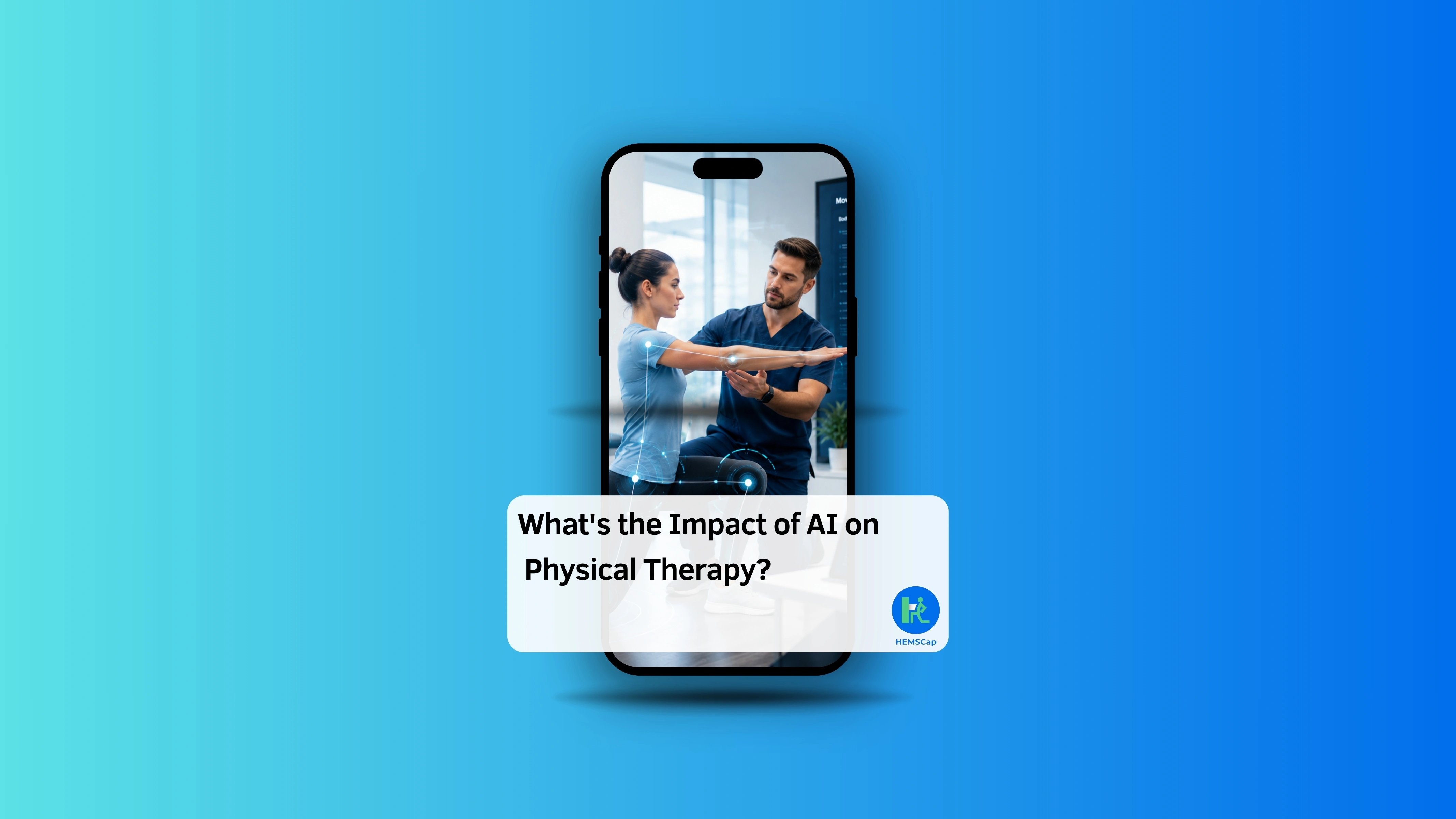
One of the biggest advancements is the use of computer vision and motion analysis systems. These technologies can analyze body movements in real time using cameras and machine learning algorithms. By tracking posture, range of motion, and exercise quality, AI-powered systems can provide instant feedback to both therapists and patients. This helps improve exercise accuracy and encourages better adherence to home exercise programs.
AI is also helping reduce the administrative burden within clinics. Documentation tasks such as SOAP notes, patient summaries, and treatment recommendations can increasingly be automated through intelligent systems. This allows physical therapists to spend less time on paperwork and more time focusing on patient care and rehabilitation outcomes.
Another major benefit of AI in physical therapy is the ability to personalize treatment plans. By analyzing patient data and recovery patterns, AI systems can support clinicians in creating individualized rehabilitation programs tailored to each patient’s condition, mobility level, and progress over time.
Remote rehabilitation and virtual care are also becoming more advanced through AI-driven platforms. Patients can now perform exercises at home while receiving real-time guidance and performance tracking. This improves accessibility for individuals who may have difficulty attending in-person sessions and helps clinics expand their care beyond traditional settings.
Despite its many advantages, experts emphasize that AI should be viewed as an assistive technology rather than a replacement for physical therapists. Human expertise, clinical judgment, empathy, and patient interaction remain essential components of effective rehabilitation and recovery.
As AI technology continues to evolve, the future of physical therapy is expected to become increasingly data-driven, connected, and patient-centered. Clinics and healthcare organizations that adopt intelligent rehabilitation tools may be better positioned to improve outcomes, increase efficiency, and deliver more personalized care experiences.
Artificial intelligence is no longer just a concept for the future of healthcare — it is already beginning to transform the daily practice of physical therapy today.