•
2026/05/30•HEMSCap Content Writer
Telehealth Rehab: How AI is Transforming Physical Therapy
Introduction
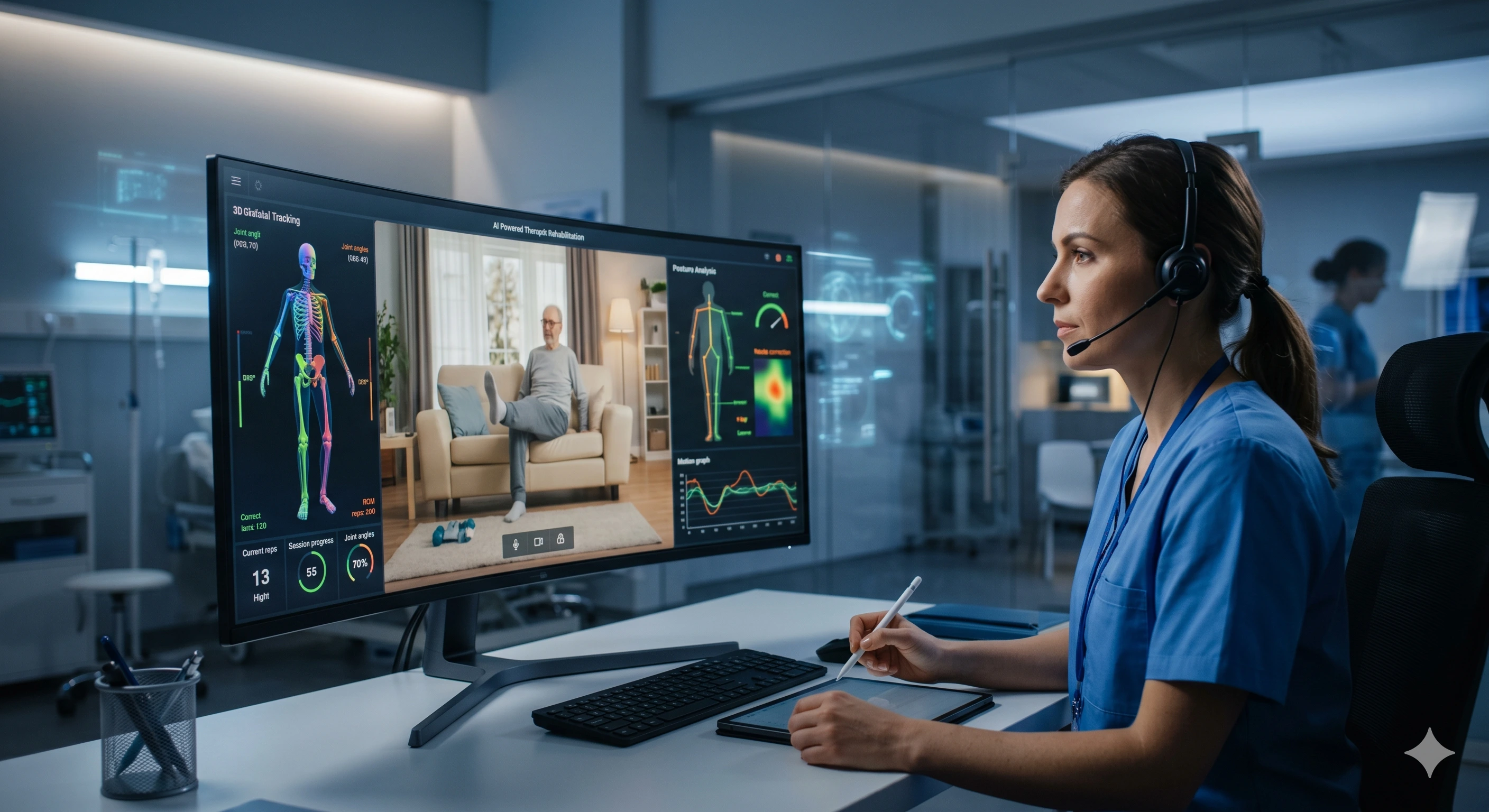
Telehealth Rehab is transforming physical therapy by combining virtual care with advanced AI technologies. As digital tools like video conferencing, motion tracking, and automated documentation become widespread, more patients can access personalized, high-quality rehab without leaving home.
This shift not only improves accessibility and engagement but also enhances outcomes and reduces costs. In this article, we explore how Telehealth Rehab powered by platforms like PivotalPT is revolutionizing rehabilitation for both patients and providers.
What Is Telehealth Rehab and Why It Matters?
Telehealth Rehab, also known as telerehabilitation, is the remote delivery of physical therapy services through digital technologies such as video conferencing, mobile apps, motion capture tools, and wearable devices. This innovative approach allows therapists to evaluate mobility and function, provide tailored exercise demonstrations, monitor patient progress, educate, and motivate patients—all without the need for in-person visits.
The importance of Telehealth Rehab lies in its ability to break down traditional barriers to care. Patients living in remote or underserved areas can access specialized therapy without traveling long distances. It also offers greater flexibility in scheduling, helping patients fit rehab sessions conveniently into their daily routines. By practicing exercises in familiar environments, patients tend to be more comfortable and engaged, which improves adherence and outcomes.
Moreover, Telehealth Rehab helps reduce costs for both patients and providers by minimizing travel expenses and facility overhead. As digital tools continue to evolve, Telehealth Rehab is becoming an essential component of modern physical therapy, enhancing accessibility, engagement, and overall effectiveness.
A growing body of research supports the effectiveness of telerehabilitation in physical therapy. For example, a systematic review by Michelle Cottrell and colleagues, published in the Journal of Telemedicine and Telecare, found that telerehabilitation for musculoskeletal conditions can achieve clinical outcomes comparable to traditional in-person therapy while improving accessibility and reducing costs. Additionally, studies indexed in Google Scholar highlight that integrating artificial intelligence into telehealth platforms enhances treatment personalization, increases patient adherence, and improves overall efficiency in rehabilitation services. These findings reinforce the growing role of AI-powered telehealth solutions in shaping the future of physical therapy.
Benefits of Telehealth Rehab
Telehealth Rehab offers a wide range of advantages for patients, therapists, and healthcare systems. Here are some of the key benefits:
1. Expanded Access to Care
Patients in remote, rural, or underserved areas can receive specialized physical therapy without the need to travel long distances. This helps reduce disparities in healthcare access.
2. Lower Costs for Patients and Providers
By minimizing travel expenses, facility overhead, and administrative costs, telehealth rehab makes physical therapy more affordable and efficient for everyone involved.
3. Flexible Scheduling
Patients can schedule sessions at times that fit their lifestyles, such as during breaks, after work hours, or on weekends, reducing missed appointments and improving consistency.
4. Enhanced Patient Engagement
Practicing exercises in familiar home environments increases patient comfort, compliance, and long-term retention of therapy routines, leading to better recovery outcomes.
5. Scalability for Clinics and Health Systems
Telehealth rehab allows clinics and health providers to serve more patients without significantly increasing staff or infrastructure, making it easier to grow and adapt to demand.
Challenges of Telehealth Rehab and How AI Provides Solutions
Despite its many benefits, Telehealth Rehab faces several challenges:
1. Limited Hands-On Interaction
Therapists cannot physically assist or correct patients during exercises, which can affect treatment accuracy.
2. Manual Documentation Burden
Therapists often spend excessive time documenting sessions, which can reduce patient interaction and increase burnout.
3. Data Fragmentation
Patient data is sometimes scattered across multiple systems, making it hard to get a complete picture of progress.
4. Technology Barriers
Some patients may lack access to high-speed internet or be unfamiliar with digital tools, limiting participation.
AI as a Game Changer
Artificial Intelligence helps address these challenges by:
- Automating documentation to reduce therapist workload and errors
- Using computer vision and motion tracking to monitor exercises remotely
- Integrating data from various sources for a unified patient overview
- Enhancing patient engagement through personalized, real-time feedback
Platforms like PivotalPT exemplify how AI can transform these challenges into opportunities, making Telehealth Rehab more effective and efficient for everyone involved.
PivotalPT: Revolutionizing Rehab Documentation
Documentation is a critical, yet time-consuming, part of every therapist’s day. PivotalPT transforms this process through AI-powered automation. The platform listens, observes, and analyzes each therapy session, generating structured documentation in real time.
How PivotalPT Works
- Live Video Monitoring: Uses computer vision to track patient movement
- Speech-to-Text Engine: Captures therapist instructions and patient responses
- Automated SOAP Notes: Generates documentation in industry-standard formats
- EHR Integration: Syncs with electronic medical record systems
- AI Learning Loop: Learns therapist preferences and improves over time
Benefits of PivotalPT for Telehealth Rehab
- Time-Saving: Reduces documentation time by up to 70%
- More Accurate: Decreases insurance rejections due to errors or omissions
- Better Workflows: Frees up therapists to focus more on patient care
- Secure and Compliant: HIPAA and GDPR aligned
Real-World Success: A Case Example
A multi-location outpatient rehab center adopted PivotalPT during the COVID-19 pandemic. Within weeks, the clinic reported:
- 3x faster documentation speed
- 60% drop in overtime hours for therapists
- 40% increase in the number of daily patients per therapist
- Greater satisfaction reported by both therapists and administrative staff
The Role of AI Beyond Note Generation
AI in Telehealth Rehab goes far beyond documentation.
Other applications include:
- Personalized Treatment Plans
- Fall Prediction Algorithms
- Gamified Rehab
- Smart Sensors
The Impact of AI on Treatment Personalization
AI's ability to personalize treatment plans based on real-time patient data marks a new era in Telehealth Rehab. With PivotalPT's advanced machine learning algorithms, therapists can create more precise treatment plans tailored to individual patients' needs.
1. Enhancing Virtual Patient Engagement
AI enables virtual coaching, reminders, and performance tracking, increasing motivation and adherence.
2. Overcoming Barriers to Remote Rehab
As technology evolves, access and usability challenges are gradually decreasing.
3. Integration with Wearable Technology
Wearables provide real-time data that enhances treatment adjustments and personalization.
PivotalPT and the Future of Telehealth Rehab
PivotalPT is at the forefront of integrating AI into Telehealth Rehab. As AI continues to evolve, its capabilities will expand into predictive analytics and virtual rehab assistants.
Discover the Future of Rehab with HEMSCap
As the demand for smart, scalable rehabilitation solutions continues to grow, HEMSCap is redefining how physical therapy is delivered through AI, automation, and clinical expertise.
Why HEMSCap?
- Tailored AI tools for therapy
- Seamless EHR integration
- Research-driven technology
- Scalable solutions
- Focus on outcomes and engagement
Final Thoughts
Telehealth Rehab is no longer a trend—it’s a cornerstone of modern rehabilitation. With AI, it goes beyond convenience to deliver better outcomes, higher patient satisfaction, and more efficient care. Platforms like PivotalPT are leading this transformation.
Telehealth Rehab is also expected to play a key role in addressing the global shortage of physical therapists by enabling clinicians to manage larger patient populations more efficiently. As reimbursement models continue to evolve, many healthcare systems are increasingly recognizing and supporting remote rehabilitation services. Furthermore, ongoing advancements in AI-driven motion analysis will likely improve diagnostic accuracy and early intervention capabilities. The integration of telehealth with preventive care strategies will also help reduce the long-term burden of chronic musculoskeletal conditions. Ultimately, the continued collaboration between clinicians and AI technologies will define the next phase of rehabilitation innovation.
Frequently Asked Questions
What Is Telehealth Rehab and How Does It Work?
Telehealth Rehab delivers therapy remotely using digital tools.
How Does AI Improve Telehealth Rehab?
AI automates processes and enhances personalization and outcomes.
Is Telehealth Rehab Effective?
Yes, studies show comparable or better outcomes than in-person therapy.
What Are the Requirements?
Internet, a smart device, and access to a platform.
How Secure Is It?
Leading platforms comply with HIPAA and GDPR standards.