•
2026/05/30•HEMSCap Content Writer
The Future of Rehabilitation: How HEMSCap's PivotalPT is Revolutionizing Physical Therapy with AI
Introduction
Physical therapy plays a critical role in helping patients recover from injuries, surgeries, and chronic conditions. However, traditional physical therapy methods often face challenges, including time-consuming documentation, limited real-time patient monitoring, and difficulty in providing personalized care at scale. This is where HEMSCap’s PivotalPT, powered by artificial intelligence (AI), is revolutionizing the rehabilitation landscape. By utilizing AI to automate processes, provide personalized feedback, and monitor patient progress in real-time, PivotalPT enhances both the patient experience and the efficiency of physical therapy practices.
In recent years, the adoption of digital health technologies has significantly increased across rehabilitation settings, driven by the need for more scalable and efficient care models.
Traditional physical therapy often relies heavily on in-person visits, which can limit accessibility for patients in remote or underserved regions.
At the same time, inconsistencies in exercise adherence and technique execution remain major challenges in achieving optimal recovery outcomes.
The emergence of AI-powered tools offers an opportunity to standardize assessment and improve continuity of care beyond the clinic environment.
As a result, there is a growing shift toward hybrid rehabilitation models that combine clinical expertise with intelligent digital systems.
Understanding Physical Therapy AI and Its Benefits
Physical Therapy AI refers to the use of artificial intelligence technology to improve the process of rehabilitation. By incorporating AI into the workflow, physical therapy becomes more efficient, accessible, and data-driven. The core aspects of AI in this field include:
- Automated Documentation: Eliminating the need for manual note-taking, AI generates accurate clinical documentation in real-time.
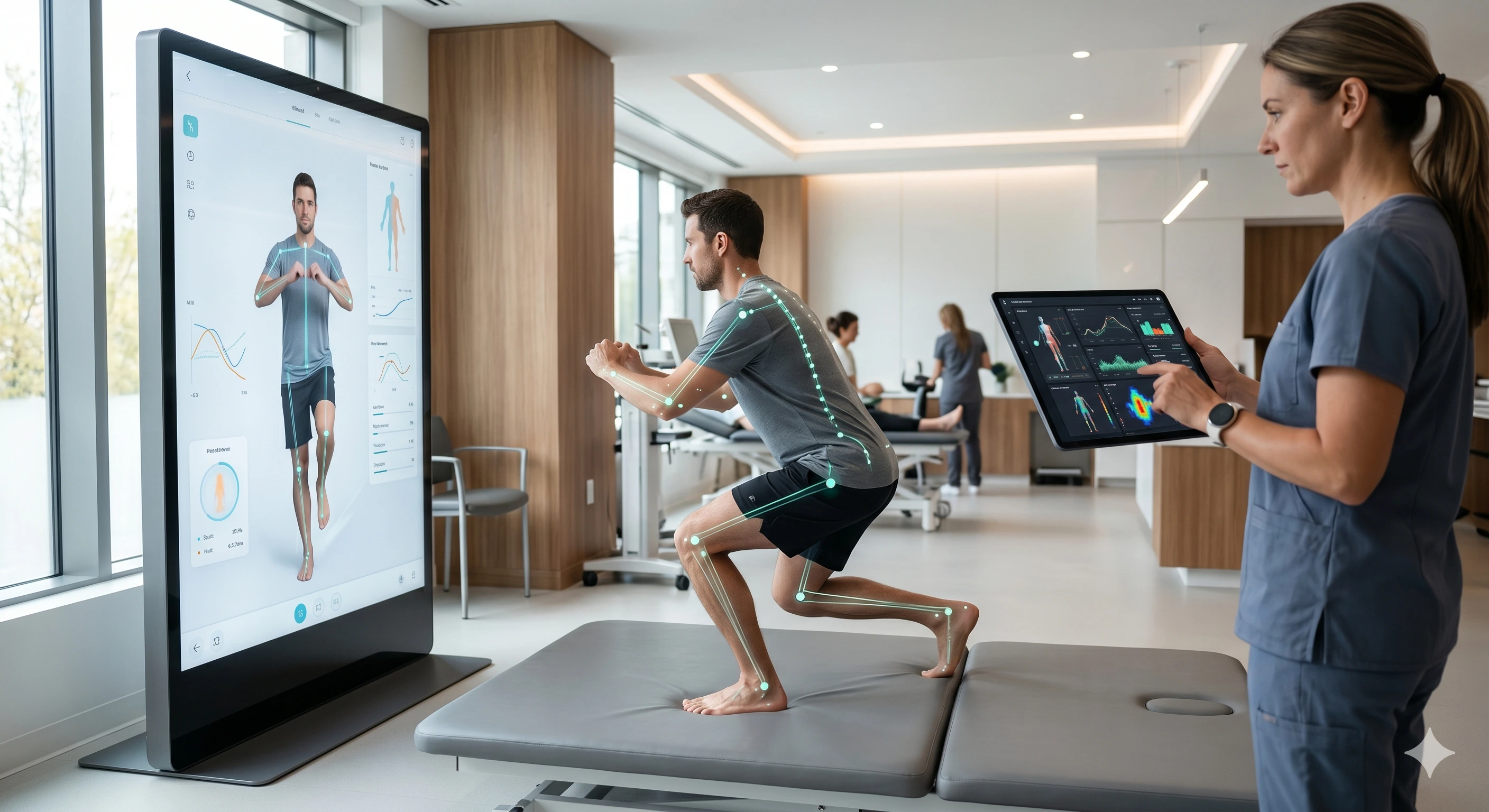
- Real-Time Feedback: Computer vision and machine learning technologies allow for real-time corrections of exercise techniques.
- Personalized Care Plans: AI analyzes individual patient data to create highly personalized rehabilitation programs.
- Remote Monitoring: Therapists can monitor patients remotely, ensuring they stay on track with their therapy plans, even outside the clinic.
- Predictive Analytics: Using patient data to predict future recovery trajectories and potential setbacks.
These capabilities allow for a more streamlined and effective approach to physical therapy, ensuring that patients receive the highest level of care possible.
HEMSCap and PivotalPT
HEMSCap is at the forefront of innovation in physical therapy, aiming to enhance therapy practices through AI. Their flagship product, PivotalPT, is an AI-powered platform designed to provide effective physical rehabilitation both in-clinic and remotely. This system is specifically designed to solve the biggest challenges therapists face, including documentation overload and patient engagement, while offering benefits for both practitioners and patients.
PivotalPT Key Features
1. Automated SOAP Note Generation
One of the most time-consuming tasks for physical therapists is documentation. PivotalPT automates the generation of SOAP (Subjective, Objective, Assessment, and Plan) notes, significantly reducing administrative workload and allowing therapists to focus more on patient care.
2. Real-Time Exercise Feedback
Using computer vision technology, PivotalPT provides real-time feedback by tracking body movements and correcting posture or technique instantly, ensuring safe and effective exercise execution.
3. Personalized Care Plans
AI analyzes patient data and continuously updates rehabilitation programs based on progress, resulting in more effective and adaptive treatment pathways.
4. Telehealth and Remote Monitoring
PivotalPT enables remote rehabilitation, allowing therapists to monitor and guide patients virtually, expanding access to care beyond clinical settings.
5. Engaging Patient Experiences
The platform includes interactive programs, virtual classes, and educational content to increase motivation and adherence to therapy plans.
The Benefits of PivotalPT for Therapists and Clinics
1. Increased Efficiency
Automation of documentation and real-time monitoring significantly reduces workload and increases clinic capacity.
2. Enhanced Patient Outcomes
Personalized care plans and continuous monitoring lead to improved recovery speed and better clinical outcomes.
3. Expanded Accessibility
Remote capabilities make physical therapy accessible to patients in rural or underserved regions.
4. Data-Driven Insights
Analytics dashboards provide actionable insights into patient progress and clinic performance.
Real-World Impact
Many clinics using PivotalPT report reduced administrative burden and improved patient engagement. Patients benefit from continuous feedback and remote access to therapy, leading to more consistent rehabilitation outcomes.
The Future of Physical Therapy with AI
HEMSCap’s commitment to innovation ensures continuous enhancement of PivotalPT. Advanced AI capabilities such as predictive analytics and deeper behavioral modeling are expected to further personalize treatment and improve clinical decision-making.
Recent research in Digital Health and Physical Therapy strongly supports this direction. A study published in Multimedia Systems highlights that computer vision-based rehabilitation systems can accurately analyze human movement, provide real-time feedback, and enable scalable remote therapy solutions. These findings confirm that AI-driven rehabilitation improves treatment precision and patient adherence while reducing the need for constant in-person supervision.
Final Thoughts
PivotalPT represents a major advancement in physical therapy by integrating AI into documentation, patient monitoring, and rehabilitation planning. By addressing key challenges in traditional therapy models, HEMSCap is helping shape a more efficient, accessible, and data-driven future for rehabilitation. As AI technology continues to evolve, platforms like PivotalPT will play an increasingly essential role in delivering high-quality patient care across both clinical and remote environments.
In addition, the integration of AI in rehabilitation is increasingly supported by clinical research showing improvements in patient adherence and functional recovery outcomes.
The ability to continuously collect and analyze movement data allows therapists to make more informed, evidence-based decisions.
This shift from subjective assessment to data-driven evaluation represents a major advancement in physical therapy practice.
Moreover, remote rehabilitation solutions are helping reduce barriers related to geography, mobility limitations, and clinic availability.
As adoption of AI tools grows, interdisciplinary collaboration between clinicians and data scientists will become essential for further innovation.
Ultimately, technologies like PivotalPT are not only optimizing current therapy workflows but also redefining the standard of care in rehabilitation science.
Frequently Asked Questions (FAQ)
1. What is PivotalPT and how does it work?
PivotalPT is an AI-powered physical therapy platform developed by HEMSCap. It uses computer vision and machine learning to track patient movements, provide real-time feedback, automate clinical documentation, and support personalized rehabilitation programs both in-clinic and remotely.
2. How does AI improve physical therapy outcomes?
AI improves physical therapy by enabling real-time movement analysis, reducing human error in exercise execution, automating documentation tasks, and creating personalized treatment plans based on patient data, which leads to faster and more effective recovery.
3. Can patients use PivotalPT at home?
Yes, PivotalPT is designed for both clinical and home use. Patients can perform prescribed exercises at home while the system monitors their movements and provides instant feedback, allowing therapists to track progress remotely.
4. Does PivotalPT replace physical therapists?
No, PivotalPT does not replace physical therapists. Instead, it acts as a supportive tool that enhances therapist efficiency by automating administrative tasks and providing data-driven insights, allowing therapists to focus more on patient care.
5. Is patient data secure when using AI-based rehabilitation systems?
Yes, platforms like PivotalPT are designed to comply with healthcare data protection standards such as HIPAA. They use secure data encryption and privacy protocols to ensure patient information is safely stored and managed.