•
2026/05/25•HEMSCap Content Writer
Enhancing Patient Care with Rehabilitation Technology and AI-Powered Solutions: The HEMSCap Advantage
Introduction
In the modern healthcare landscape, rehabilitation technology is transforming the way patients receive care and recover from injuries, surgeries, and chronic conditions. These technologies play a critical role in optimizing the rehabilitation process, offering more efficient, personalized, and accessible treatment options for patients. The integration of artificial intelligence (AI), remote monitoring, and telemedicine has revolutionized the field, making rehabilitation not only more effective but also more engaging for patients.
One of the leading platforms pioneering in the use of rehabilitation technology is HEMSCap. This AI-powered, remote physical therapy platform is specifically designed to address the gaps in traditional rehabilitation models by offering an intelligent, patient-centered approach that enhances recovery outcomes and increases patient engagement.
In parallel, healthcare systems are facing increasing pressure to improve outcomes while reducing costs and clinician workload. Rehabilitation technology helps address these challenges by enabling data-driven care and extending therapy beyond the clinic setting. As a result, providers can monitor patient progress more consistently and intervene earlier when issues arise, leading to more efficient and effective recovery pathways.
What Is Rehabilitation Technology?
Rehabilitation technology refers to the use of advanced tools and devices designed to assist in the recovery and rehabilitation of individuals suffering from physical impairments or disabilities. These technologies range from robotic rehabilitation systems, AI-driven therapy tools, telehealth platforms, and wearables that track patients’ progress in real-time.
With the growing need for efficient healthcare solutions and a desire for more patient-centric care models, rehabilitation technology is a game-changer. It provides healthcare professionals with real-time data, automates repetitive tasks, and offers patients a personalized rehabilitation experience, which ultimately leads to better health outcomes.
In addition, rehabilitation technology supports more objective and data-driven clinical decision-making by providing measurable insights into patient performance. This allows clinicians to track outcomes more accurately over time and adjust interventions based on real patient data rather than subjective assessment alone.
How HEMSCap Is Revolutionizing Rehabilitation Technology
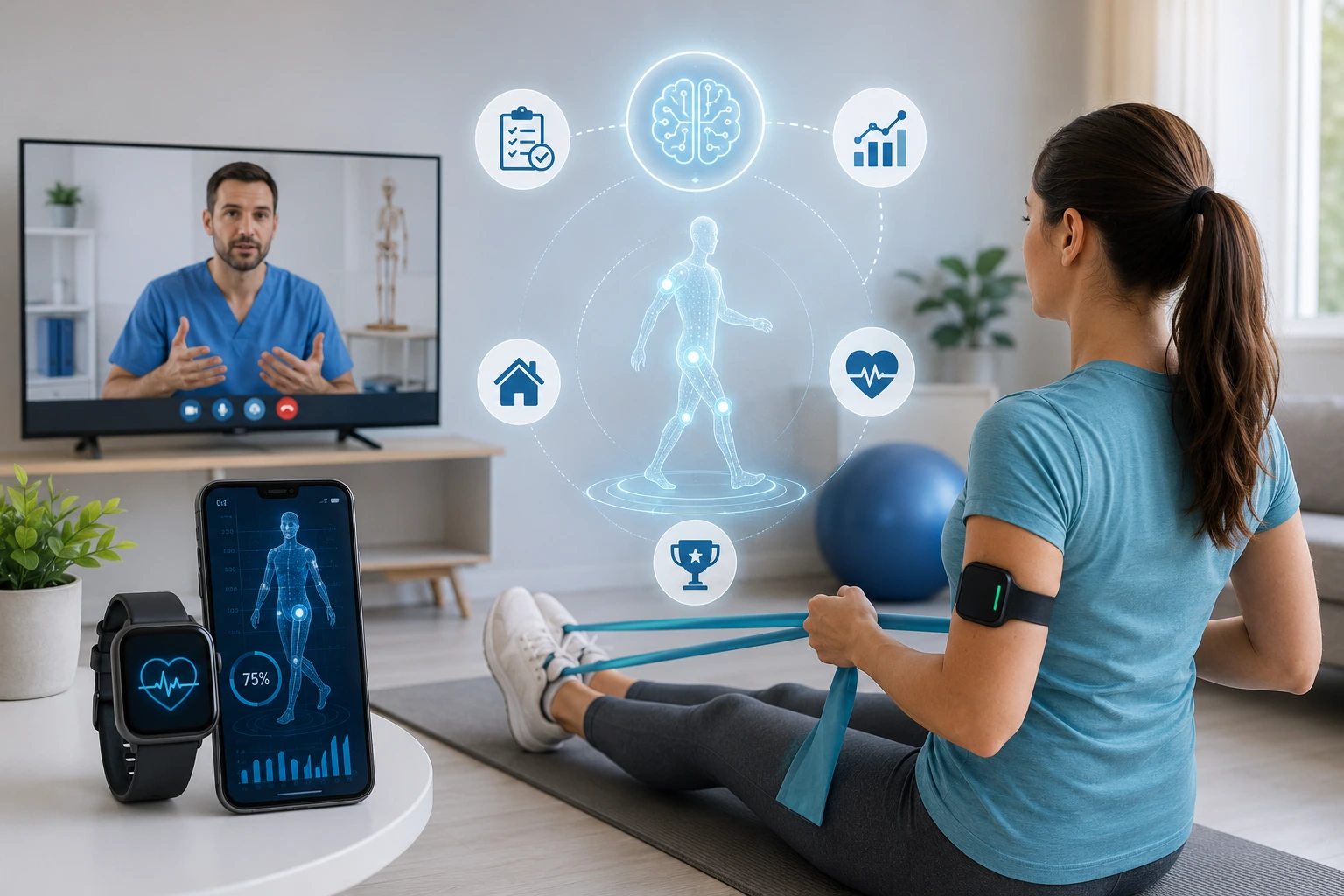
HEMSCap takes rehabilitation technology to the next level by integrating AI, remote monitoring, and automated workflows into its physical therapy platform. The result is an innovative solution that not only addresses the needs of physiotherapists but also significantly enhances the patient experience.
1. AI-Driven Personalized Treatment Plans
HEMSCap uses AI to analyze patient data and generate personalized treatment plans based on real-time feedback, ensuring each patient receives tailored rehabilitation support.
2. Remote Monitoring for Continuous Progress Tracking
Through wearable and connected technologies, HEMSCap enables clinicians to monitor patient progress remotely and adjust treatment plans in real time.
3. Automated Note Generation with PivotalPT
The platform automates clinical documentation, reducing administrative workload and allowing therapists to focus more on patient care.
4. Gamification and Progress Visualization
Gamified elements and visual progress tracking increase patient motivation and adherence to prescribed rehabilitation programs.
5. Accessibility and Convenience Through Telehealth
Patients can complete therapy sessions from home, removing barriers such as travel time, mobility limitations, and scheduling constraints.
The Benefits of Rehabilitation Technology in Healthcare
- Increased Accessibility: Remote access to rehabilitation services regardless of location
- Enhanced Adherence: Personalized care and gamification improve patient engagement
- Improved Efficiency: Automation reduces administrative workload
- Cost Savings: Fewer in-person visits reduce overall treatment costs
Evidence Supporting Telerehabilitation Effectiveness in Musculoskeletal Care
A growing body of high-quality systematic reviews has demonstrated that telerehabilitation is an effective and evidence-based approach for managing musculoskeletal conditions. Research shows that remote rehabilitation interventions can achieve clinical outcomes comparable to traditional face-to-face therapy, particularly in reducing pain intensity, improving physical function, and increasing patient adherence. An overview of systematic reviews published in Digital Health found that most included studies reported positive effects of telerehabilitation for chronic musculoskeletal pain, supporting its integration into modern physiotherapy practice and highlighting its role in improving accessibility and continuity of care.
Final Thoughts: The Future of Rehabilitation Technology
Rehabilitation technology continues to reshape modern healthcare by making recovery more accessible, efficient, and personalized. Platforms like HEMSCap demonstrate how AI, automation, and remote monitoring can significantly improve patient outcomes and clinical workflows.
As healthcare systems increasingly shift toward value-based care, technologies that enable measurable outcomes and continuous patient engagement are becoming essential rather than optional. Remote Therapeutic Monitoring (RTM), for example, is gaining traction in the United States as providers seek scalable ways to track patient progress outside the clinic while maintaining reimbursement opportunities.
Moreover, the integration of AI into rehabilitation is not about replacing clinicians, but enhancing their decision-making with data-driven insights. This allows physical therapists to intervene earlier, adjust treatment plans more accurately, and reduce the risk of patient dropout during recovery.
Interoperability is another critical factor shaping the future of rehabilitation technology. Platforms that can seamlessly integrate with existing EHR/EMR systems will have a significant advantage, as clinics increasingly demand unified workflows and centralized patient data.
Patient expectations are also evolving. Today’s patients are more digitally engaged and expect convenient, on-demand healthcare experiences similar to other digital services they use daily. Telehealth and home-based rehabilitation solutions directly respond to this shift.
However, successful adoption of rehabilitation technology still depends on usability, clinician training, and clear clinical validation. Solutions that are too complex or disrupt existing workflows may face resistance, even if they offer advanced features.
Data privacy and security will continue to play a crucial role as more patient data is collected remotely. Compliance with regulations such as HIPAA is essential for building trust and ensuring long-term adoption.
Ultimately, the future of physical therapy lies in a hybrid model—combining in-person expertise with digital support tools. Companies like HEMSCap are helping define this model by bridging the gap between clinic-based care and continuous, real-world patient monitoring.
Frequently Asked Questions
What is rehabilitation technology?
Rehabilitation technology includes AI tools, telehealth systems, and wearable devices that support patient recovery from injuries, surgeries, or chronic conditions.
How does HEMSCap use AI in physical therapy?
HEMSCap uses AI to create personalized treatment plans and provide real-time feedback to improve rehabilitation outcomes.
Can HEMSCap monitor patient progress remotely?
Yes, it uses connected devices and wearables to track patient movement, adherence, and progress remotely.
Is HEMSCap suitable for remote physical therapy?
Yes, it is designed for telehealth-based rehabilitation, allowing patients to complete therapy at home.
How does gamification help in patient rehabilitation?
Gamification in HEMSCap uses rewards, milestones, and progress visualization to motivate patients. It makes therapy more engaging, encouraging patients to complete exercises and reach recovery goals.