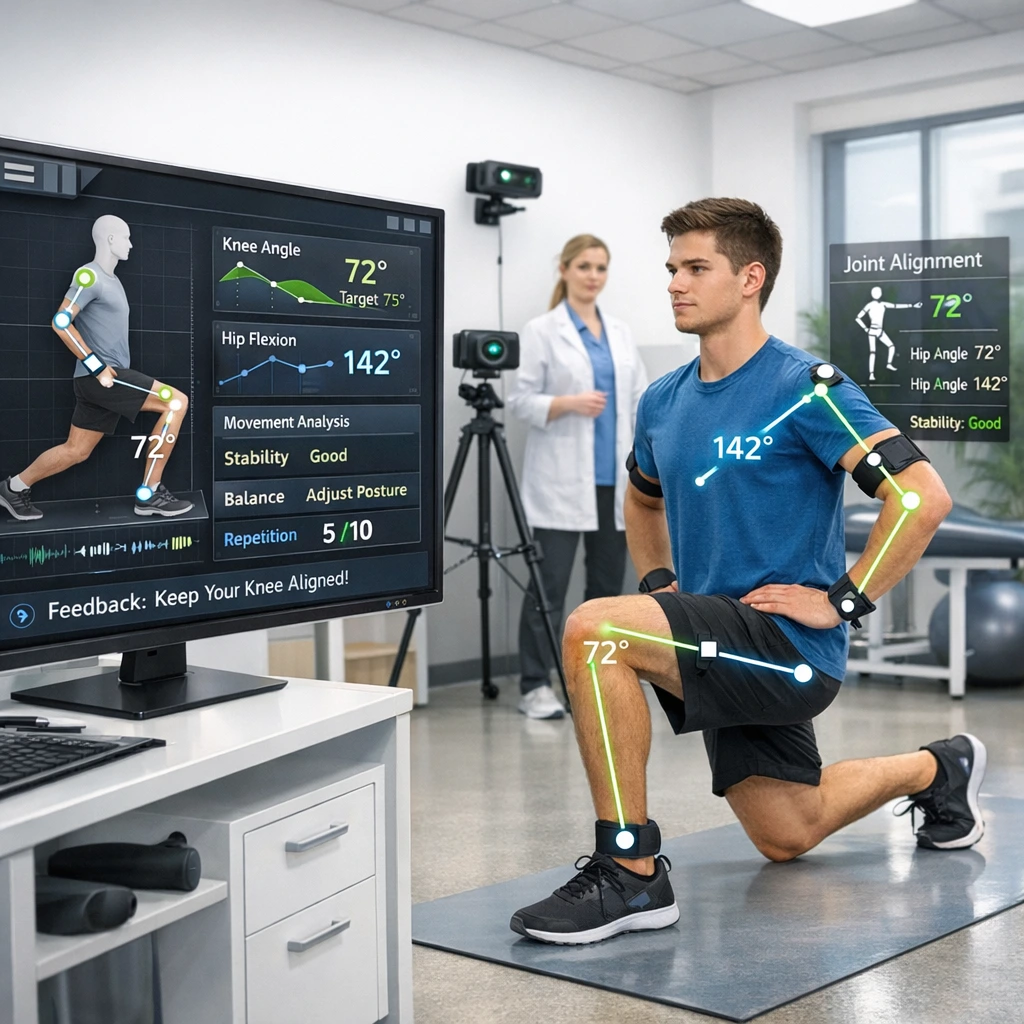
Motion Tracking in Physical Therapy : Revolutionizing Digital Rehabilitation and Smart Home Exercises
Introduction
Physical therapy has traditionally relied on visual observation and patient-reported progress, which can lead to inconsistent assessments and limited quantitative data. These limitations often make it challenging to track improvements accurately or to optimize treatment plans. Motion Tracking in Physical Therapy is an emerging digital solution that provides precise data on joint angles, movement patterns, and exercise performance. This technology enables clinicians to make evidence-based decisions, enhances patient adherence, and improves treatment outcomes. Physical therapy has traditionally relied on visual observation and patient-reported progress, which can lead to inconsistent assessments and limited quantitative data. These limitations often make it challenging to track improvements accurately or to optimize treatment plans. Motion Tracking in Physical Therapy is an emerging digital solution that provides precise data on joint angles, movement patterns, and exercise performance. This technology enables clinicians to make evidence-based decisions, enhances patient adherence, and improves treatment outcomes . Recent research shows that computer vision–based movement analysis tools can detect joint motion and key movement patterns with a high degree of reliability, approaching that of traditional marker-based systems used in clinical settings . Additionally, depth sensor and AI-based tracking methods have been demonstrated to support real‑time, personalized feedback for gait and posture assessment in remote settings, thus expanding the reach of physical therapy beyond clinic walls . This shift toward quantitative motion analysis reduces subjective bias inherent in visual evaluation and supports remote rehabilitation strategies, particularly in home exercise monitoring and telehealth applications.
What is Motion Tracking in Physical Therapy?
Technical Definition
Motion Tracking involves using sensors, computer vision and artificial intelligence (AI) to monitor and analyze a patient's movements. Systems can capture joint angles, range of motion(ROM) and motion patterns in real time, providing measurable, reliable data for physical therapists.
Differences from Traditional Assessment
Traditional assessment methods rely heavily on visual observation and therapist expertise, which can introduce subjectivity and inconsistency. Motion tracking allows for quantitative analysis, enabling therapists to compare pre- and post-treatment performance and identify subtle compensatory movements.
Applications of Motion Tracking in Physical Therapy
Initial Patient Assessment
- Precise Measurement of Range of Motion: Motion tracking captures joint angles accurately, allowing therapists to identify restrictions or asymmetries.
- Identification of Compensatory Patterns: Early detection of abnormal movement helps plan corrective interventions.
- Pre- and Post-Treatment Comparison: Quantitative data allows clinicians to measure improvements objectively.
Home Exercise Monitoring
- Real-Time Feedback: Patients receive immediate corrections while performing exercises at home.
- Reduced Error in Exercise Execution: Tracking ensures movements are performed correctly, reducing risk of injury.
- Enhanced Patient Adherence: Digital monitoring encourages consistent participation in therapy programs.
Tele-Rehabilitation Applications
- Remote Monitoring: Therapists can supervise patient progress without in-person visits.
- Reduced Unnecessary Clinic Visits: Saves time for both patients and providers.
- Expanded Access: Patients in rural or underserved areas can receive high-quality therapy remotely.
Clinical Benefits of Motion Tracking in Physical Therapy
- Data-Driven Decision Making: Therapists can plan interventions based on precise, measurable data.
- Accurate Documentation of Progress: Continuous tracking provides reliable records for evaluation and reporting.
- Increased Patient Motivation: Real-time feedback engages patients and encourages consistent participation.
- Standardized Assessment: Reduces human error and ensures consistent evaluation across sessions.
Management Benefits for Clinics
- Optimized Therapist Time: Motion tracking reduces the need for repetitive supervision.
- Automated Documentation: Reports and therapy records can be generated automatically.
- Digital Service Integration: Combines in-clinic therapy with home-based exercises for hybrid care.
- Competitive Advantage: Clinics offering advanced technology attract more patients seeking innovative treatment options.
HEMSCap’s Role in Motion Tracking for Physical Therapy
HEMScap is a real and active platform leveraging AI and motion tracking to enhance physical therapy outcomes.
- PivotalPT: Provides real-time movement analysis, capturing joint positions and assessing movement quality.
- Home Exercise Monitoring: Tracks home exercises and delivers immediate, precise feedback.
- Telehealth Integration: Enables remote therapy sessions and continuous data collection.
- Documentation and Reporting: Automatically generates treatment reports for patients and clinics.
- Outcome Improvement: HEMSCap focuses on increasing therapy precision while reducing human error.
Challenges and Limitations
- Algorithm Accuracy in Uncontrolled Environments: External factors may affect tracking precision.
- User Training Required: Both therapists and patients must learn to use the system effectively.
- Data Privacy and Security: Sensitive patient movement data requires secure handling.
- Initial Implementation Costs: Equipment and software investments can be significant.
Future of Motion Tracking in Physical Therapy
- Integration with Wearable Devices: Continuous monitoring outside the clinic.
- Predictive AI Analytics: Forecast patient progress and potential risks.
- Standardized Motion Data: Global adoption could unify movement assessment standards.
- Expansion in Neurological and Orthopedic Therapy: Enhances rehabilitation outcomes for diverse patient populations.
Final Thoughts
Implementing Motion Tracking in Physical Therapy improves assessment accuracy, reduces human error, and enhances patient engagement in home exercises. Clinics can adopt this technology gradually to gain clinical and management benefits while improving patient outcomes. Platforms like HEMSCap demonstrate how AI-powered motion tracking can integrate both in-clinic and remote care for an optimized rehabilitation experience.
Implementing Motion Tracking in Physical Therapy improves assessment accuracy, reduces human error, and enhances patient engagement in home exercises. Clinics can adopt this technology gradually to gain clinical and management benefits while improving patient outcomes. Platforms like HEMSCap demonstrate how AI-powered motion tracking can integrate both in-clinic and remote care for an optimized rehabilitation experience. Evidence from recent studies indicates that motion tracking can significantly improve adherence to home exercise programs by providing immediate, quantifiable feedback . Quantitative motion data also enables therapists to detect subtle compensatory movements that may be missed during visual assessments, allowing for earlier intervention and better recovery trajectories (Nature, 2025). Tele-rehabilitation programs using motion tracking have been shown to maintain or even enhance patient outcomes compared to traditional in-person sessions, particularly for post-operative orthopedic and neurological rehabilitation (Archives of Physical Medicine and Rehabilitation. By integrating motion tracking data into electronic health records, clinics can standardize outcome measurement and facilitate long-term monitoring across multiple patients. Finally, motion tracking supports evidence-based decision-making, reduces unnecessary in-person visits, and provides a scalable solution for clinics aiming to deliver high-quality, patient-centered care.
FAQ
- How does Motion Tracking in Physical Therapy work?
Motion tracking uses sensors and AI algorithms to capture and analyze patient movement, measuring joint angles and motion quality.
- Does this technology replace the therapist?
No, it serves as a supportive tool, providing precise data to assist therapists in decision-making.
- Is it reliable for home exercises?
Yes, real-time feedback ensures exercises are performed correctly, improving safety and adherence (Archives of Physical Medicine and Rehabilitation.
- How is it different from wearable sensors?
Motion tracking can operate with or without wearable devices, often using computer vision, whereas wearable sensors provide data only from the device location.
- Can small clinics implement it?
Yes, scalable platforms like HEMScap allow phased implementation, making the technology accessible for small practices.