•
2026/04/07•HEMSCap Content Writer
The Future of Patient Monitoring: HEMSCap’s AI-Driven Approach to Rehab and Clinical Efficiency
Introduction
In the fast-paced world of healthcare, patient monitoring is no longer confined to hospitals or ICUs. It’s evolving into a connected, AI-powered process that extends from clinics to patient’s homes. Through advanced data tracking, remote care platforms, and real-time feedback, healthcare providers are gaining unprecedented insights into patients’ progress and conditions.
At the forefront of this evolution is HEMSCap, a healthcare technology company reshaping rehabilitation and documentation through its AI-driven platform, PivotalPT, which combines real-time exercise monitoring and automated note generation.
As healthcare continues to embrace digital transformation, the role of patient monitoring has expanded far beyond traditional boundaries. With an aging global population and the rise of chronic conditions, healthcare systems are under pressure to deliver better outcomes with fewer resources. Patient monitoring, especially when enhanced with AI and remote technology, has emerged as a critical strategy to meet these demands.
What is Patient Monitoring?
Patient monitoring is the collection and analysis of physiological data such as:
- Heart rate
- Blood pressure
- Oxygen levels
- Respiratory rate
- Body temperature
Modern systems go beyond vital signs. They incorporate motion tracking, behavioral feedback, and AI-powered alerts to optimize patient outcomes.
The Importance of Patient Monitoring
- Early Detection of Complications: Detect issues before they escalate, allowing timely intervention.
- Reduced Hospital Readmissions: Especially in chronic conditions, remote monitoring keeps patients stable at home.
- Individualized Treatment: Real-time data lets clinicians tailor care based on progress and adherence.
- Operational Efficiency: Less administrative burden, fewer emergencies, and shorter hospital stays.
Types of Patient Monitoring
- Hospital-Based Monitoring: Traditional bedside systems, ICU monitors.
- Remote Patient Monitoring: At-home tracking with wearables or mobile apps.
- Ambulatory Monitoring: Short-term mobile monitoring (24–74 hours).
- Neuro / Fetal Monitoring: EEGs, Fetal heart rate sensors.
- AI-powered Rehab Platforms: Like PivotalPT, for physical therapy and note automation.
HEMSCap’s Innovation: All-in-One Smart Rehab
Founded in California by Dr. Hoda Salsabili, HEMSCap blends AI, computer vision, and healthcare expertise into a smart, adaptive system. Its flagship product, PivotalPT, redefines how clinicians support patients and document progress.
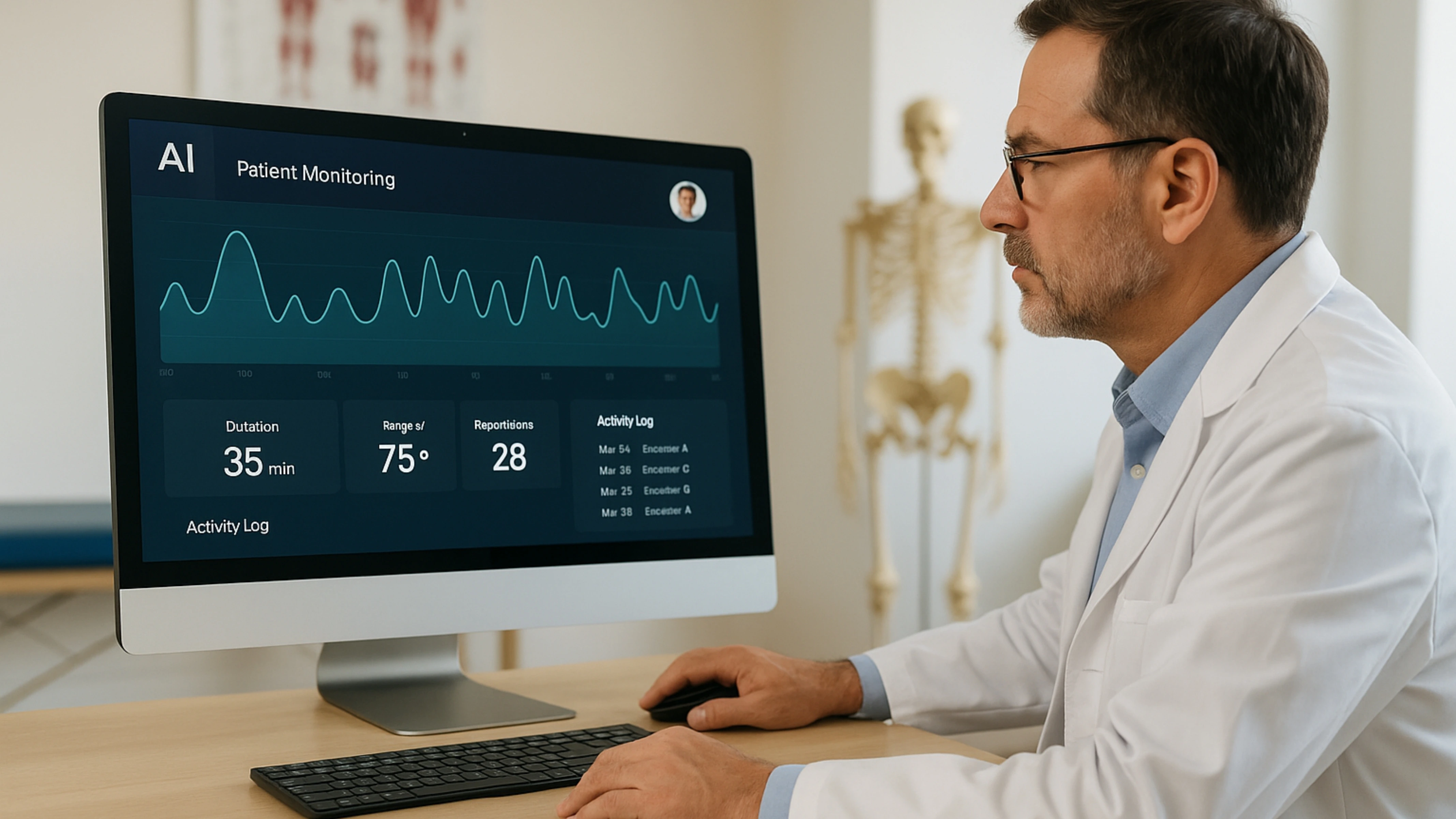
PivotalPT AI-Assisted Patient Monitoring and Engagement for Physical Therapists
PivotalPT is an AI-assisted platform designed to help physical therapists monitor patients during rehab exercises. Using computer vision and real-time analytics, it offers:
- Real-time feedback on posture and form
- Progress tracking across sessions
- Adaptive exercise guidance based on patient performance
- AI-generated SOAP notes through voice recognition
Unlike fully autonomous systems, PivotalPT keeps therapists in the loop, enhancing their ability to engage and guide patients while reducing administrative workload.
Technology Behind Modern Patient Monitoring
- AI and Machine Learning: Analyze data patterns and detect anomalies
- Computer Vision: Visual tracking of movement accuracy
- Voice Recognition: Enables hands‑free note creation
- Wearable Sensors: Seamless data collection from home
- Cloud Connectivity: Real-time access across locations
Key Challenges in Patient Monitoring
Despite the promise, several challenges exist:
- Data Overload: Too many alerts can lead to fatigue
- Privacy and Compliance: Security of sensitive medical data is paramount
- Digital Literacy: Some patients may struggle with technology
- Device Integration: Not all systems talk to each other yet
The Future of Patient Monitoring
The future lies in:
- Predictive Monitoring: AI alerts before symptoms appear
- Hyper Personalization: AI-driven recommendations tailored to each individual
- Miniaturized Wearables: Comfortable, always-on sensors
- Global Access: Remote care for rural and underserved communities
Why HEMSCap Stands Out
What makes HEMSCap unique is its dual-functionality in a single platform:
- Clinicians get accurate, automated SOAP notes
- Patients get AI-guided physical therapy with visual feedback
- Universities and training centers use it to teach next-gen therapy
- Clinics save time, standardize care, and scale more efficiently
HEMSCap’s commitment to intelligent care, patient empowerment, and clinical efficiency makes it a leader in smart rehab and documentation.
How HEMSCap Elevates the Future of Rehab
Patient monitoring is evolving into a dynamic, AI-powered process that blends technology with human care. With platforms like PivotalPT by HEMSCap, therapists and patients gain tools that streamline recovery and documentation alike.
For clinics aiming to modernize, and patients seeking a smoother recovery path, HEMSCap is not just a tech solution it’s the future of intelligent, connected rehabilitation.
Case Study: Remote Rehab Success
One example of successful patient monitoring comes from a rehabilitation clinic in California using HEMSCap’s PivotalPT. A 68-year-old stroke patient engaged in home-based therapy using the platform. Over six weeks, the system tracked improvements in range of motion, balance, and strength, while automatically generating weekly reports and clinical notes. The therapist reported a 30% time savings on documentation and higher patient adherence compared to traditional methods.
Comparison: HEMSCap vs Traditional Tools
Traditional rehab tools often rely on subjective visual assessments and manual note-taking. In contrast, HEMSCap offers:
- Objective, real-time metrics on patient motion
- Automated progress dashboards
- Voice-powered SOAP notes generated in seconds
- Adaptive therapy sessions that adjust based on performance
These features combine to increase both patient engagement and clinician productivity.
Latest Trends in Patient Monitoring
- Telemonitoring in Rural Areas: Ensures quality care in underserved regions.
- AI-Powered Predictive Alerts: Notifies clinicians of early warning signs.
- Multi-Sensor Integration: Wearables now track stress, sleep, and gait.
- Personalized Dashboards: Patients and families see progress in real time.
Regulatory and Compliance Considerations
Patient monitoring tools must comply with global standards such as:
- HIPAA (USA)
- GDPR (Europe)
- ISO 13485 for medical device software
HEMSCap's platform is designed with these compliance frameworks in mind, ensuring patient data privacy and secure cloud storage.
The Role of Data in Modern Rehab
Data collected from patient monitoring isn’t just for clinicians—it’s also valuable for researchers and policy makers. It enables:
- Evidence-based care planning
- Predictive analytics for resource allocation
- Improved clinical training through anonymized case review
Artificial Intelligence in Rehabilitation: Evidence from Recent Research
Recent scientific literature highlights the transformative role of artificial intelligence in modern rehabilitation practices, demonstrating how AI-powered technologies can enhance patient monitoring, personalize treatment strategies, and support real‑time clinical decision‑making. For example, a comprehensive review published in SLAS Technology outlines how machine learning, computer vision, and natural language processing are being integrated into rehabilitation systems to support adaptive, data‑driven patient assessment and intervention, enabling more accurate monitoring of performance and improved therapy outcomes compared to traditional methods. This research underscores the shift toward interactive and adaptive AI rehabilitation systems with capabilities for continuous assessment and dynamic feedback, aligning closely with the innovations seen in platforms like HEMSCap’s PivotalPT.
Final Thoughts
Patient monitoring is rapidly evolving from traditional bedside tools to intelligent, AI-powered systems that enable personalized, remote, and efficient care. With the growing demands on healthcare systems, platforms like HEMSCap’s PivotalPT offer a future-forward solution—blending smart rehab, real-time feedback, and automated clinical documentation.
Whether you're a rehab specialist, clinic administrator, or educator, adopting innovative tools like PivotalPT means staying ahead in patient care, streamlining operations, and improving outcomes.
The future of patient monitoring isn't coming—it's already here. And HEMSCap is leading the way.
Frequently Asked Questions (FAQs) About Patient Monitoring
Q1: What is patient monitoring in healthcare?
Patient monitoring refers to the continuous tracking of vital signs, physical activity, and other health metrics to assess a patient’s condition and guide treatment.
Q2: How does remote patient monitoring work?
Remote patient monitoring uses wearables, mobile apps, and cloud-connected devices to collect health data from patients at home and send it to clinicians in real time.
Q3: What makes HEMSCap’s PivotalPT unique?
HEMSCap’s PivotalPT combines AI, computer vision, and voice recognition to deliver real-time rehab monitoring and automated clinical documentation in one unified platform.
Q4: Why is AI important in modern patient monitoring?
AI helps analyze large sets of patient data, detect anomalies, predict complications, and personalize therapy—improving outcomes and efficiency.
Q5: Is HEMSCap compliant with healthcare regulations?
Yes, HEMSCap is built with HIPAA, GDPR, and ISO 13485 compliance in mind to ensure patient data security and regulatory alignment.