•
2026/03/16•HEMSCap Content Writer
RPM strategies for moving from discharge to hospital-at-home care
As healthcare systems continue to evolve, the transition from hospital discharge to home-based care is becoming a critical focus area. Rather than viewing discharge as the end of treatment, providers are increasingly recognizing it as a key step in a continuous care journey. This shift is especially important in hospital-at-home models, where patients receive acute-level care in the comfort of their homes.
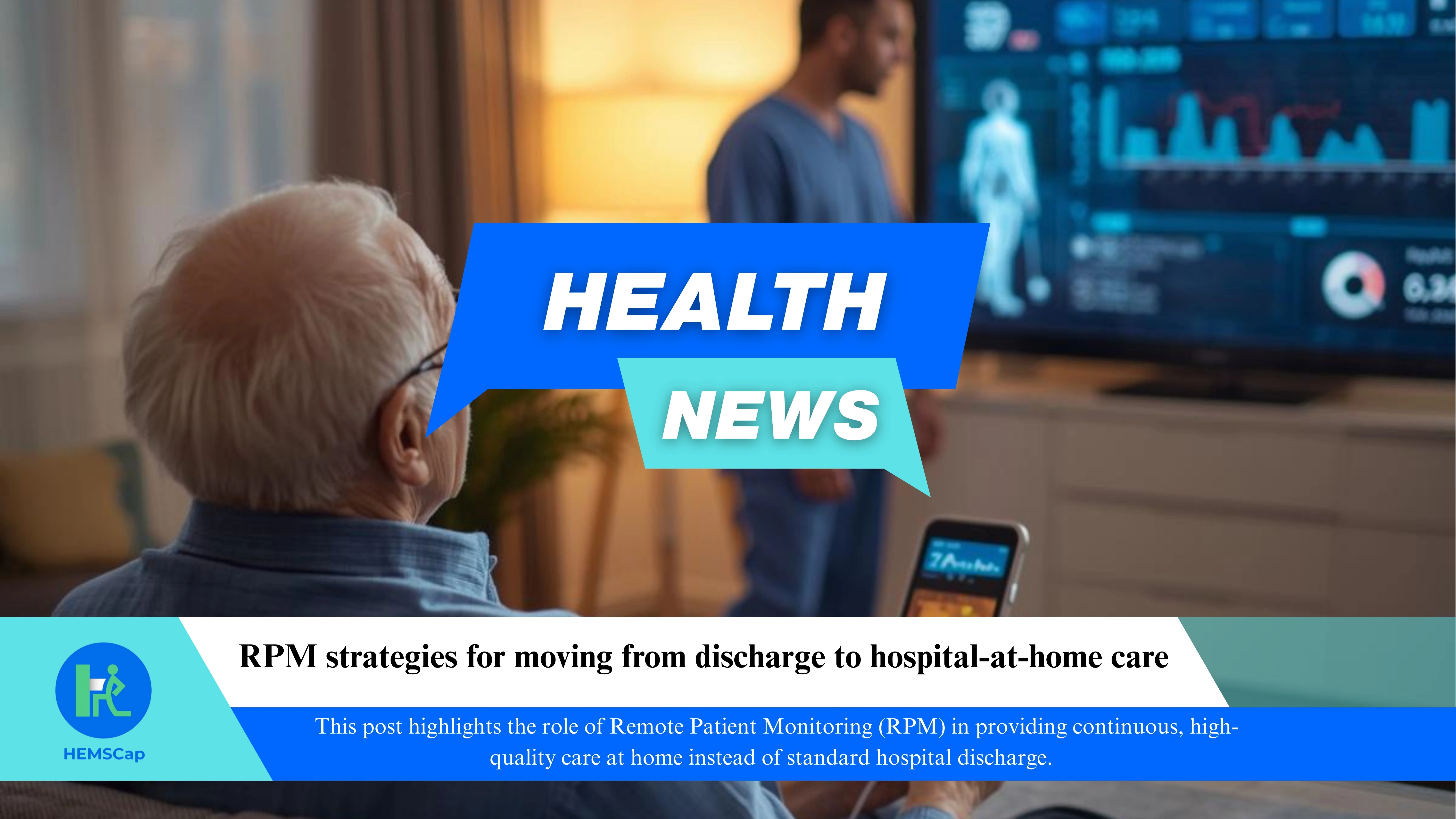
Remote Patient Monitoring (RPM) plays a central role in enabling this transformation. By using connected digital tools and monitoring technologies, care teams can track patients’ health data after they leave the hospital. These systems allow clinicians to observe vital signs, monitor recovery progress, and respond quickly if any concerning changes occur. This proactive approach helps reduce risks associated with post-discharge gaps in care.
The article highlights that successful hospital-at-home programs require structured workflows, clear communication between care teams, and strong technological support. RPM helps bridge the gap between inpatient and home environments by ensuring that patients remain connected to their healthcare providers. This continuous oversight supports safer recovery, timely interventions, and improved coordination among clinicians.
In addition, RPM can enhance patient engagement by encouraging individuals to actively participate in their recovery process. When patients feel supported and monitored, confidence increases and unnecessary readmissions may be reduced. The integration of digital health strategies into post-discharge planning is therefore becoming an essential component of modern care delivery models.
Overall, the movement toward hospital-at-home care represents a significant opportunity to redesign how healthcare is delivered. With Remote Patient Monitoring as a foundational strategy, healthcare organizations can create safer transitions, strengthen continuity of care, and improve outcomes beyond the hospital setting.