•
2026/03/16•HEMSCap Content Writer
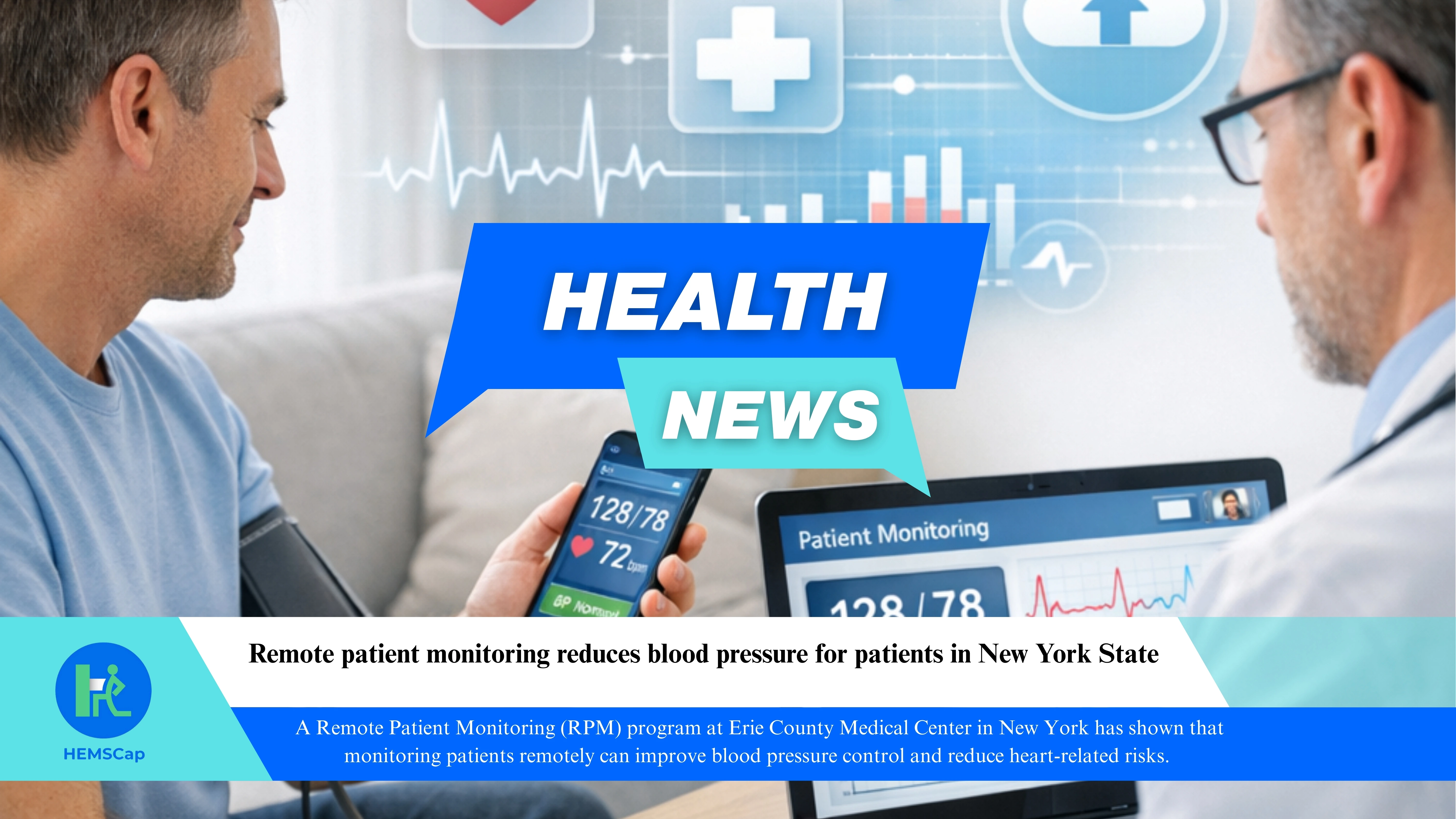
Remote patient monitoring reduces blood pressure for patients in New York State
High blood pressure remains one of the most significant risk factors for cardiovascular disease worldwide. According to global health data, approximately 1.39 billion people are living with hypertension, and nearly 46% of them have uncontrolled blood pressure. If not properly managed, high blood pressure can lead to serious health conditions such as heart attack, stroke, heart failure, kidney disease, and premature death. For this reason, healthcare systems are increasingly exploring innovative approaches to improve the management of hypertension and other chronic conditions.
A recent initiative in New York State demonstrates how digital health technologies can help address this challenge. A Remote Patient Monitoring (RPM) program implemented at Erie County Medical Center Corporation (ECMC) has shown promising results in improving blood pressure control among patients. ECMC, located in western New York, serves a large population of medically underserved and high-risk patients. In this region, rates of cardiovascular disease and related mortality are reported to be higher than the national average, highlighting the need for new strategies to support long-term patient care.
One of the major challenges in managing hypertension is limited access to consistent healthcare services. Social and economic barriers, transportation issues, and geographic limitations can make it difficult for many patients to attend regular medical appointments. As a result, healthcare providers are increasingly turning to digital health solutions such as remote patient monitoring to ensure that patients receive continuous care outside of traditional clinical settings.
To address this need, ECMC partnered with Brook Health to launch a comprehensive hypertension management program that combines remote monitoring technology, telehealth services, nurse-led care management, and patient education. As part of the program, patients are provided with a Bluetooth-enabled blood pressure monitor that connects to their mobile device. The readings are automatically transmitted to the care team, allowing clinicians to track patients’ blood pressure trends in real time.
This continuous flow of data enables healthcare providers to identify abnormal readings quickly and intervene when necessary. Instead of relying solely on occasional in-person visits, clinicians can monitor patients more closely and provide timely guidance or treatment adjustments when needed. This approach helps create a more proactive and responsive model of care.
Another important feature of the program is its focus on accessibility and patient support. The service is offered at no cost to patients, and for individuals who do not have access to a smartphone, the program helps provide one through support initiatives. In addition to monitoring blood pressure, participants receive regular health education, weekly blood pressure reviews, and guidance on medication adherence. Care teams also work with patients to promote healthy lifestyle changes, including improvements in diet, increased physical activity, and weight management.
The program, which began in June 2022, has produced encouraging results. So far, more than 830 patients with hypertension have enrolled in the program, and the patient retention rate has reached 92%, indicating strong engagement among participants. Data from the initiative shows that 74% of patients who remained in the program for more than three months were able to reduce their blood pressure to below 140/90. In addition, 32% of patients achieved blood pressure levels below 130/80, and many of them were able to maintain these improvements for several months.
These results highlight the potential of remote patient monitoring to improve health outcomes and support better management of chronic diseases. By providing continuous visibility into patient health data, RPM programs allow healthcare providers to detect issues earlier, deliver personalized guidance, and strengthen patient engagement in their own care.
Beyond improving clinical outcomes, remote monitoring can also help reduce the need for frequent in-person visits, making healthcare more convenient for patients while easing pressure on healthcare facilities. As healthcare systems continue to adopt digital tools, remote monitoring is becoming an increasingly important component of modern care delivery.
The success of ECMC’s initiative demonstrates how digital health technologies, telehealth services, and patient-centered care models can work together to address complex health challenges such as hypertension. As similar programs expand, they have the potential to improve access to care, enhance disease management, and support healthier communities.
In parallel with these developments, innovative platforms such as HEMScap are also transforming healthcare delivery through technology. By leveraging Artificial Intelligence (AI), HEMScap provides advanced solutions for remote physical therapy and rehabilitation, enabling therapists to monitor patient exercises, movement quality, and recovery progress digitally while supporting more effective remote care.