•
2026/02/28•HEMSCap Content Writer
The Future of Digital Care: How Tele-rehabilitation Solutions Are Transforming Physical Therapy
Introduction
Healthcare delivery is undergoing a major digital transformation, and physical therapy is no exception. Among the most significant innovations in this space is the rise of Tele-rehabilitation Solutions—technology-driven platforms that enable remote delivery, monitoring, and optimization of rehabilitative care.
Tele-rehabilitation is no longer simply a temporary alternative to in-person visits. It represents a scalable, data-driven care model that improves access, enhances patient engagement, and supports clinical decision-making through digital tools and intelligent automation.
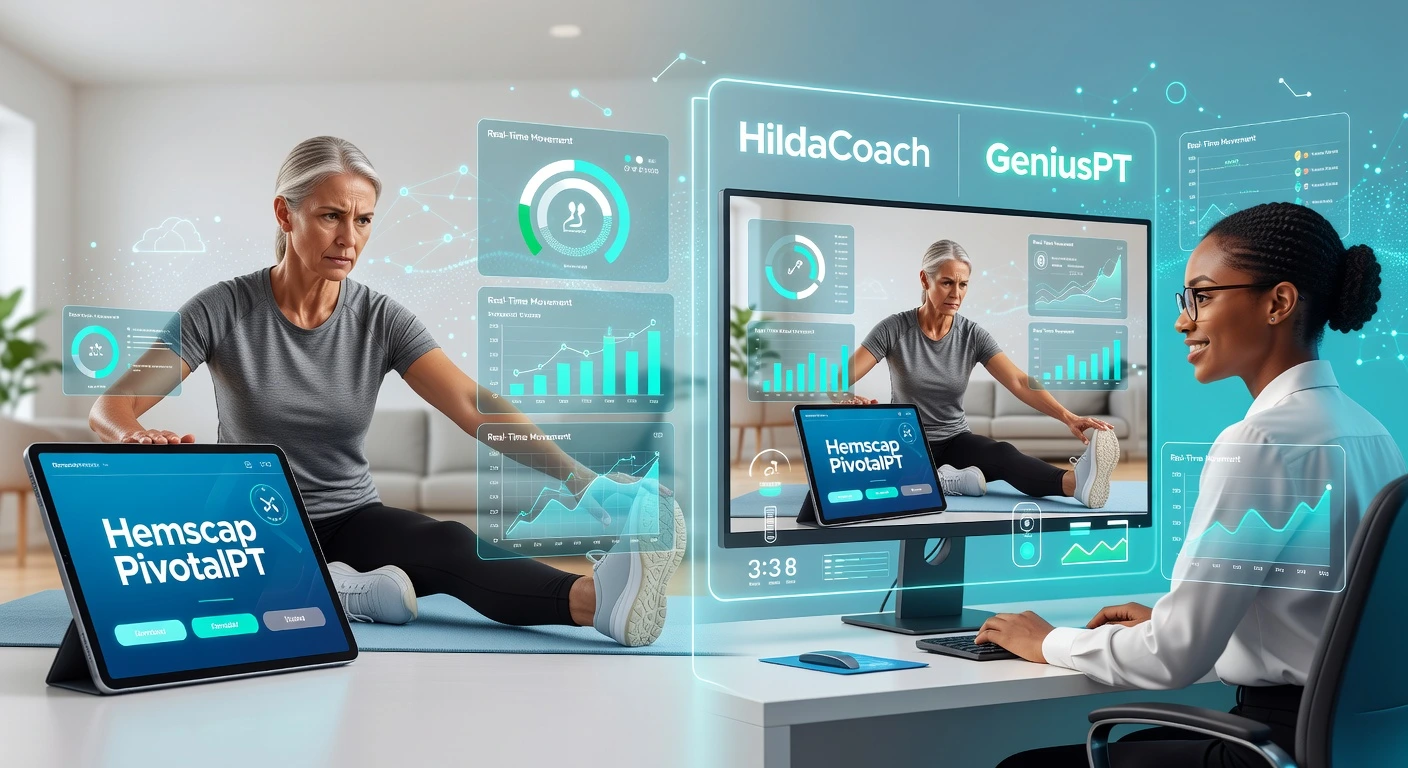
Companies like Hemscap are actively contributing to this transformation by developing structured, AI-enabled platforms designed specifically for digital physical therapy. Through its three primary solutions—PivotalPT, HildaCoach, and GeniusPT—Hemscap provides an integrated ecosystem that supports remote care, patient adherence, and clinical documentation.
This article explores how Tele-rehabilitation Solutions work, why they matter, and how Hemscap’s platforms contribute to the evolving future of physical therapy.
What Are Tele-rehabilitation Solutions?
Tele-rehabilitation Solutions refer to digital platforms and tools that allow physical therapy services to be delivered and monitored remotely. These systems typically combine virtual consultations, exercise monitoring, performance tracking, data analytics, and automated documentation features.
Unlike traditional in-clinic-only models, tele-rehabilitation enables continuous care beyond physical walls. It allows therapists to maintain oversight of patient progress, even when sessions occur at home.
Why Tele-rehabilitation Solutions Matter
- Expanded Access to Physical Therapy Services
Patients in rural areas, individuals with mobility challenges, or those with scheduling limitations can access care without geographic barriers. This improves equity and continuity of treatment.
- Improved Monitoring and Data Collection
Digital platforms collect measurable performance data. Therapists can analyze trends, assess adherence, and adjust treatment plans based on objective information rather than relying solely on self-reporting.
- Operational Efficiency for Clinics
Remote tools help reduce scheduling bottlenecks and optimize therapist time. Clinics can extend services without proportionally increasing infrastructure costs.
- Stronger Patient Engagement
Real-time feedback, structured guidance, and interactive systems increase the likelihood that patients complete prescribed exercises correctly and consistently.
Hemscap’s Role in Advancing Tele-rehabilitation Solutions
Hemscap is a health technology company focused on AI-powered digital platforms for physical therapy. Its mission centers on improving care quality, increasing efficiency, and expanding access through intelligent, remote-enabled systems.
Rather than offering a single tool, Hemscap has developed three complementary solutions:
- PivotalPT
- HildaCoach
- GeniusPT
Together, these platforms address core components of modern Tele-rehabilitation Solutions: movement analysis, patient engagement, and clinical documentation.
PivotalPT: A Comprehensive Tele-rehabilitation Platform
PivotalPT is Hemscap’s primary digital platform designed to support remote rehabilitation and hybrid care models. It integrates movement tracking, virtual care capabilities, and structured program management.
Key Capabilities of PivotalPT
- Movement Analysis and Performance Monitoring
PivotalPT incorporates motion tracking technologies that assess how exercises are performed. This allows therapists to evaluate quality of movement and functional progress using measurable data.
- Telehealth Integration
The platform supports virtual sessions, enabling therapists and patients to connect remotely while maintaining structured oversight of treatment plans.
- Personalized Digital Exercise Programs
Therapists can create and manage individualized rehabilitation plans tailored to each patient’s clinical needs.
- Real-Time Progress Tracking
Patient performance data can be reviewed and analyzed, allowing clinicians to make informed adjustments to therapy protocols.
How PivotalPT Supports Clinics
- Enhanced Clinical Decision-Making
Objective data supports more precise evaluations and outcome tracking.
- Expanded Service Delivery Models
Clinics can offer hybrid care—combining in-person visits with remote follow-ups—without compromising quality.
Benefits for Patients
- Guided Exercise Execution
Patients receive structured direction when completing exercises outside the clinic.
- Ongoing Remote Oversight
Even between appointments, therapists maintain visibility into patient progress.
PivotalPT represents a foundational component of modern Tele-rehabilitation Solutions by bridging physical therapy expertise with digital accessibility.
HildaCoach: An AI-Powered Digital Exercise Companion
HildaCoach is designed to support patients during home-based rehabilitation. As an AI-driven coaching platform, it enhances adherence and structured exercise completion.
While therapists design and prescribe the program, HildaCoach helps reinforce execution and engagement outside clinical settings.
Core Features of HildaCoach
- Intelligent Exercise Guidance
The platform assists patients in following prescribed exercise plans accurately and consistently.
- Performance Tracking and Data Recording
Exercise completion and progress data are documented, contributing to measurable outcome tracking.
- Enhanced Patient Engagement
Digital interaction increases accountability and reinforces commitment to rehabilitation programs.
HildaCoach’s Role in Tele-rehabilitation Solutions
- Improved Home Exercise Compliance
- Non-adherence is a common barrier in physical therapy. A structured digital companion helps address this challenge.
- Continuity of Care Between Sessions
- Patients remain connected to their rehabilitation process even outside scheduled visits.
By supporting home-based engagement, HildaCoach strengthens the overall tele-rehabilitation ecosystem.
GeniusPT: Intelligent Documentation Automation
Administrative workload is one of the most time-consuming aspects of clinical practice. GeniusPT addresses this challenge by leveraging AI capabilities to assist with documentation.
Accurate documentation is especially critical in Tele-rehabilitation Solutions, where digital records must support both clinical continuity and compliance.
Key Functions of GeniusPT
- AI-Assisted Documentation Generation
- GeniusPT supports the creation of treatment documentation, including assessment components and care planning elements.
- Reduced Administrative Burden
- By streamlining documentation workflows, therapists can devote more time to patient interaction.
- Standardized Reporting Structure
- Consistent documentation improves record quality and operational efficiency.
GeniusPT’s Impact on Remote Physical Therapy
- Improved Workflow Efficiency
- Therapists can manage digital caseloads more effectively.
- Enhanced Data Integrity
- Structured documentation supports measurable outcomes in remote care models.
GeniusPT complements PivotalPT and HildaCoach by addressing the operational backbone of Tele-rehabilitation Solutions.
How Hemscap’s Solutions Work Together
Each of Hemscap’s platforms addresses a different dimension of digital physical therapy:
- PivotalPT
Focuses on movement analysis, virtual sessions, and structured remote rehabilitation management. It forms the clinical core of Tele-rehabilitation Solutions.
- HildaCoach
Strengthens patient adherence and home engagement by supporting exercise completion outside clinical settings.
- GeniusPT
Enhances workflow efficiency through AI-assisted documentation and administrative optimization.
Together, these solutions create a connected digital ecosystem that supports therapists, clinics, and patients in a comprehensive manner.
The Future of Tele-rehabilitation Solutions
Tele-rehabilitation Solutions are becoming a permanent part of healthcare infrastructure. Advances in artificial intelligence, motion analysis, and remote monitoring technologies continue to expand the scope of what digital physical therapy can achieve.
Looking ahead, we can expect:
- Greater integration of AI in clinical decision support
- Expanded hybrid care models combining virtual and in-person services
- Increased reliance on data-driven outcome measurement
- Broader adoption across hospital systems and outpatient clinics
Organizations investing in structured digital platforms are better positioned to adapt to evolving patient expectations and regulatory environments.
Clinical Evidence Supporting Tele-rehabilitation Solutions
Clinical research indexed in Google Scholar supports the effectiveness of tele-rehabilitation models in physical therapy. A systematic review and meta-analysis published in the Journal of Telemedicine and Telecare by Cottrell et al. (2017) concluded that real-time telerehabilitation for musculoskeletal conditions produces clinical outcomes comparable to standard in-person care. The study found similar improvements in pain reduction and functional outcomes when tele-rehabilitation was appropriately implemented.
These findings reinforce the role of Tele-rehabilitation Solutions as evidence-based approaches rather than temporary alternatives. When structured properly and supported by appropriate clinical oversight, remote physical therapy delivery can meet established care standards while expanding access to treatment.
Final Thoughts
Tele-rehabilitation Solutions represent a transformative shift in how physical therapy is delivered and managed. By improving access, enhancing monitoring capabilities, and increasing operational efficiency, these systems support a more scalable and patient-centered model of care.
Hemscap’s platforms—PivotalPT, HildaCoach, and GeniusPT—illustrate how integrated digital tools can address movement analysis, patient engagement, and documentation within a unified ecosystem.
As healthcare continues to evolve, adopting structured and evidence-informed Tele-rehabilitation Solutions may provide clinics and providers with a meaningful competitive and clinical advantage.
Tele-rehabilitation Solutions not only expand access to physical therapy but also enable evidence-based treatment adjustments using real-time patient data. These platforms support outcome measurement and adherence tracking, which are critical for both short-term recovery and long-term functional improvement. By integrating AI-driven tools like Hemscap’s PivotalPT, HildaCoach, and GeniusPT, clinics can maintain high-quality care while reducing administrative burden. Ultimately, the adoption of these solutions aligns with modern healthcare trends emphasizing efficiency, patient engagement, and data-informed decision-making.
Frequently Asked Questions (FAQ)
1. What are Tele-rehabilitation Solutions?
Tele-rehabilitation Solutions are digital platforms that enable remote delivery and monitoring of physical therapy services. They integrate virtual sessions, performance tracking, and structured documentation tools.
2. Can tele-rehabilitation fully replace in-person physical therapy?
In many cases, it serves as a strong complement to in-person care. However, certain assessments and manual interventions still require direct physical interaction.
3. What does PivotalPT provide in a tele-rehabilitation model?
PivotalPT supports motion tracking, remote sessions, and structured program management. It enables data-driven monitoring within digital physical therapy environments.
4. How does HildaCoach improve patient outcomes?
HildaCoach enhances adherence by guiding patients through prescribed exercises at home. This strengthens continuity of care between clinical sessions.
5. How does GeniusPT support therapists?
GeniusPT streamlines documentation using AI-assisted tools. This reduces administrative workload and improves workflow efficiency in remote and hybrid care models.